Refurbishment and extension of a primary school in Klein Nordende-Lieth
| Location | Klein Nordende, Germany |
| Year | 2023 |
| Status | Closed competition |
| Client | Schulverband Klein Nordende-Lieth |
| Program | 12 classrooms, auditorium, cantine, workshop and individual rooms, common spaces |
| Area | 4.300 m2 |
| Team | Jola Starzak, Dawid Strębicki, Enrico Armentani, Mikołaj Betka, Katarzyna Krawczyk, Adrianna Pierzycka |
| In collaboration with | Pracownia Architektury Krajobrazu Marta Tomasiak |
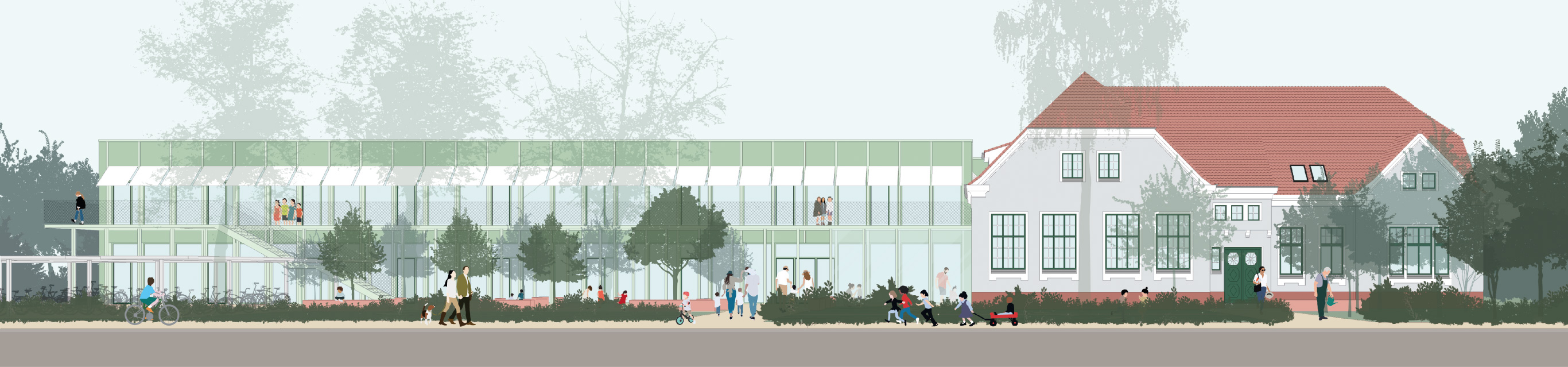
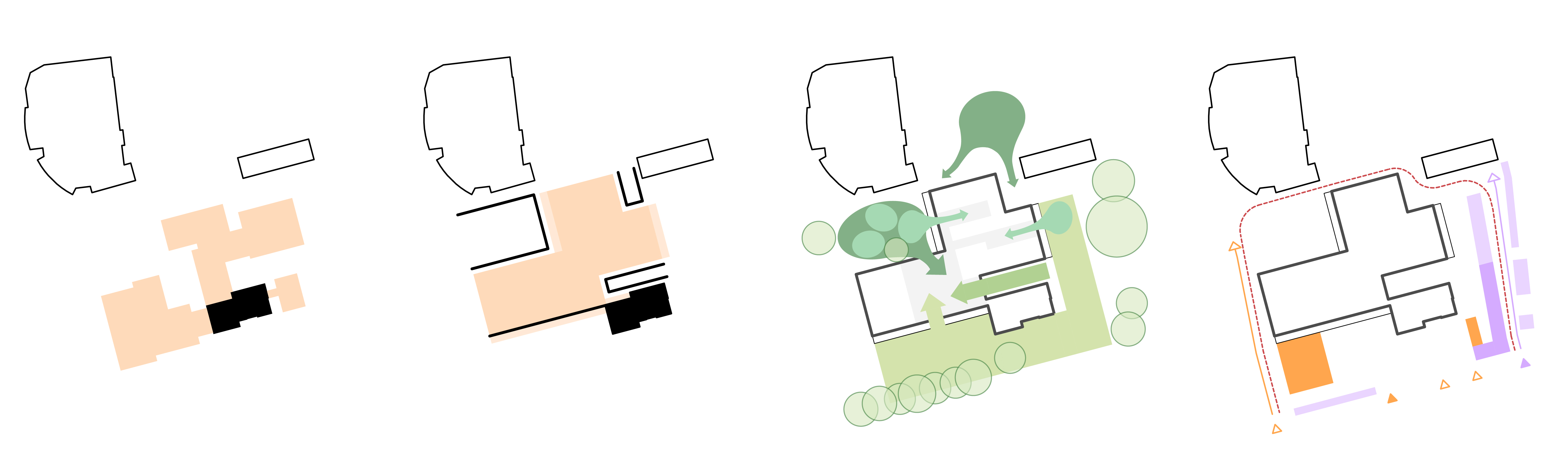
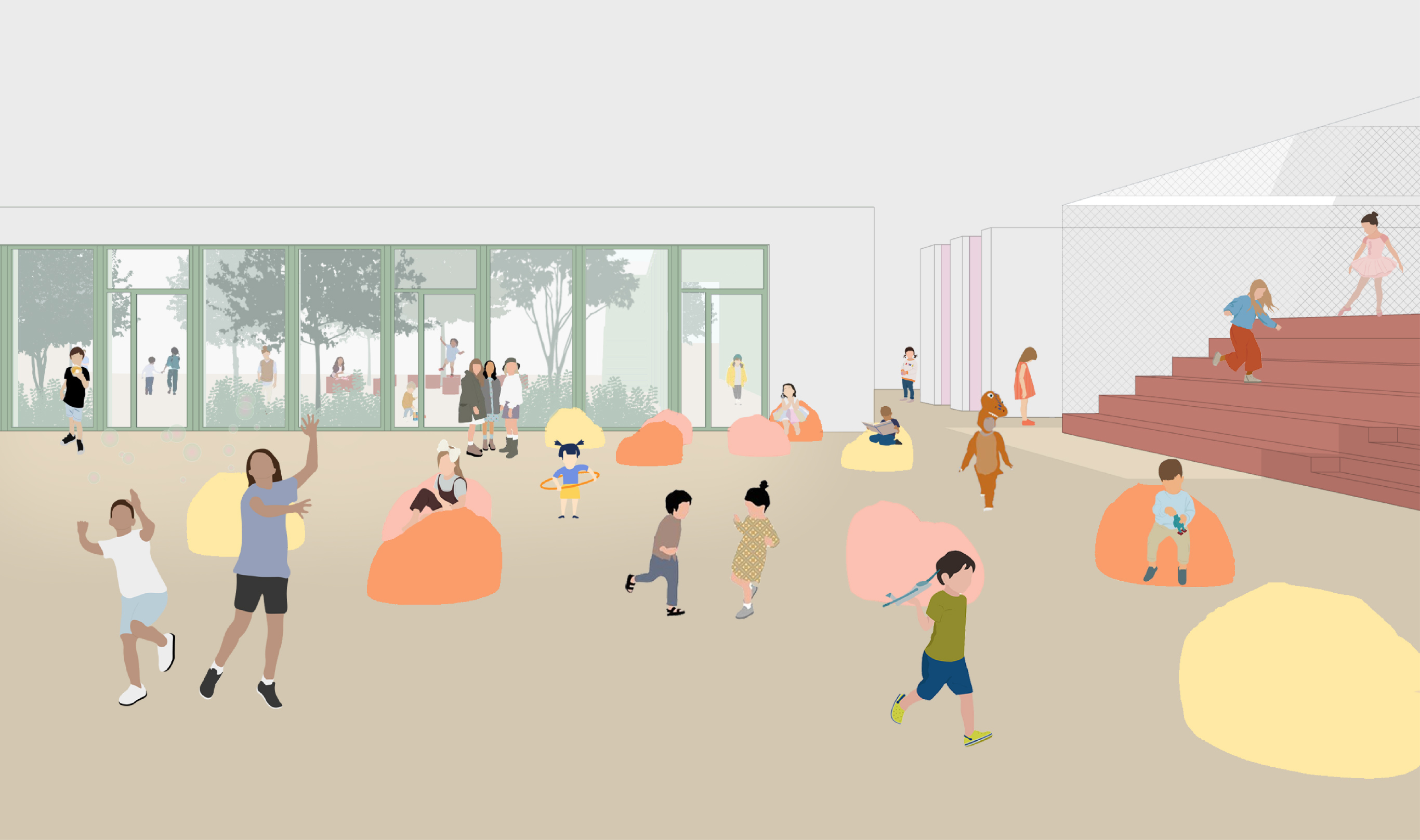
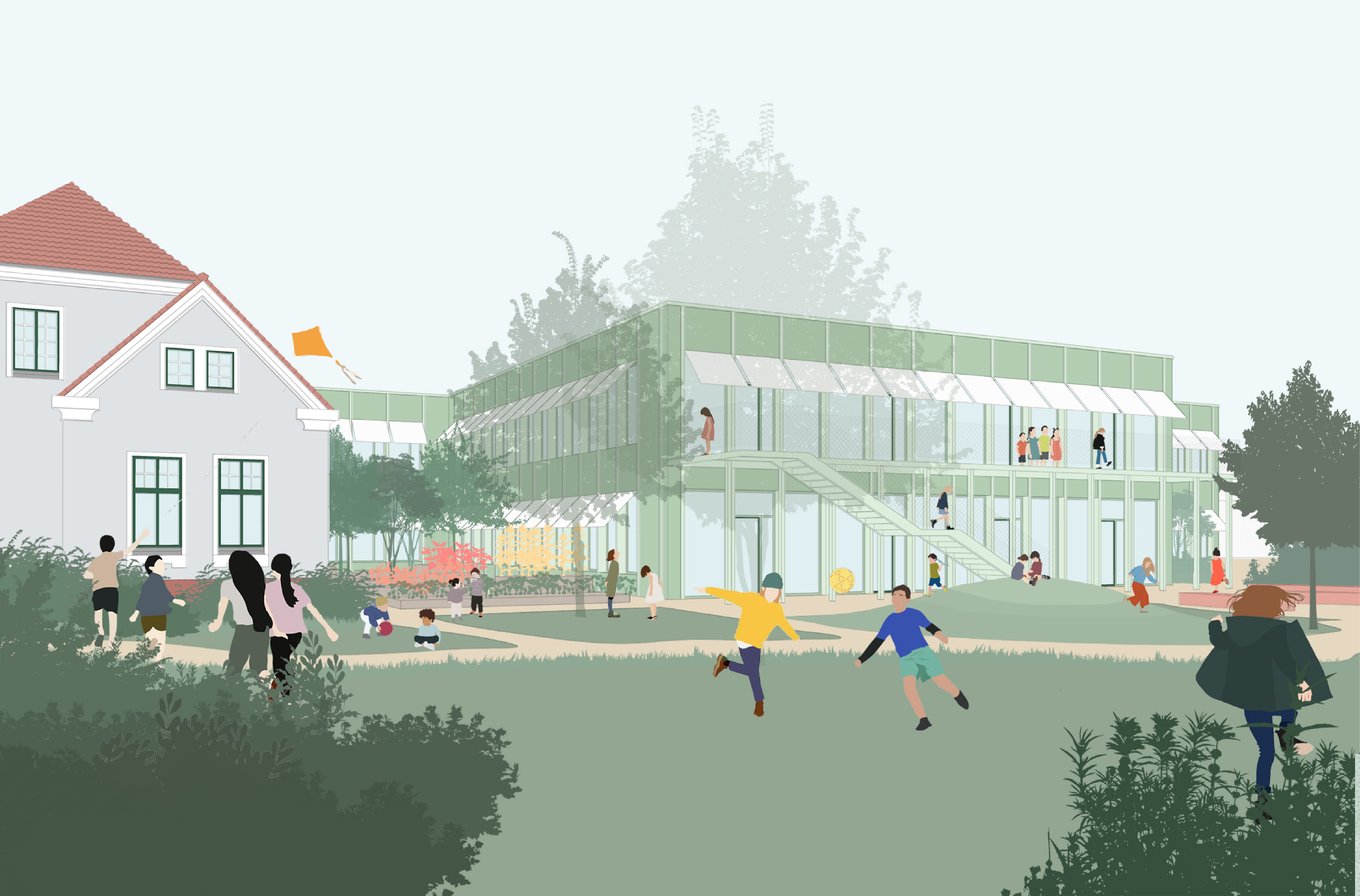
The school complex in Klein Nordende-Lieth consists of two subtly linked elements: the newly designed part and the existing building from 1910. It is an all-day learning and living space, which means that its architecture responds to a variety of changing needs: on one hand, it is a quiet, safe space where children can feel at home, a place where they can recover from the intense sensory impulses of the outside world. On the other hand, the building also provides space for a wide range of activities: group and individual, physical and mental. With easy access to these activities pupils can naturally and playfully acquire new skills.
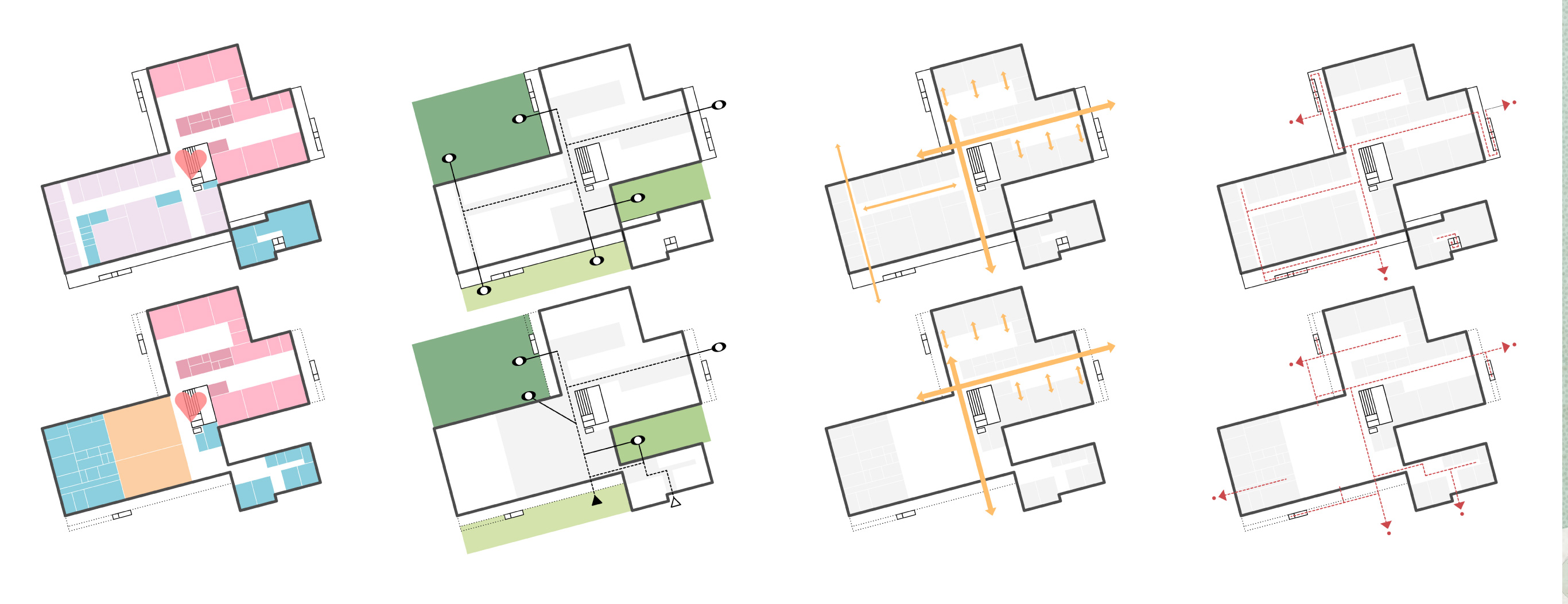
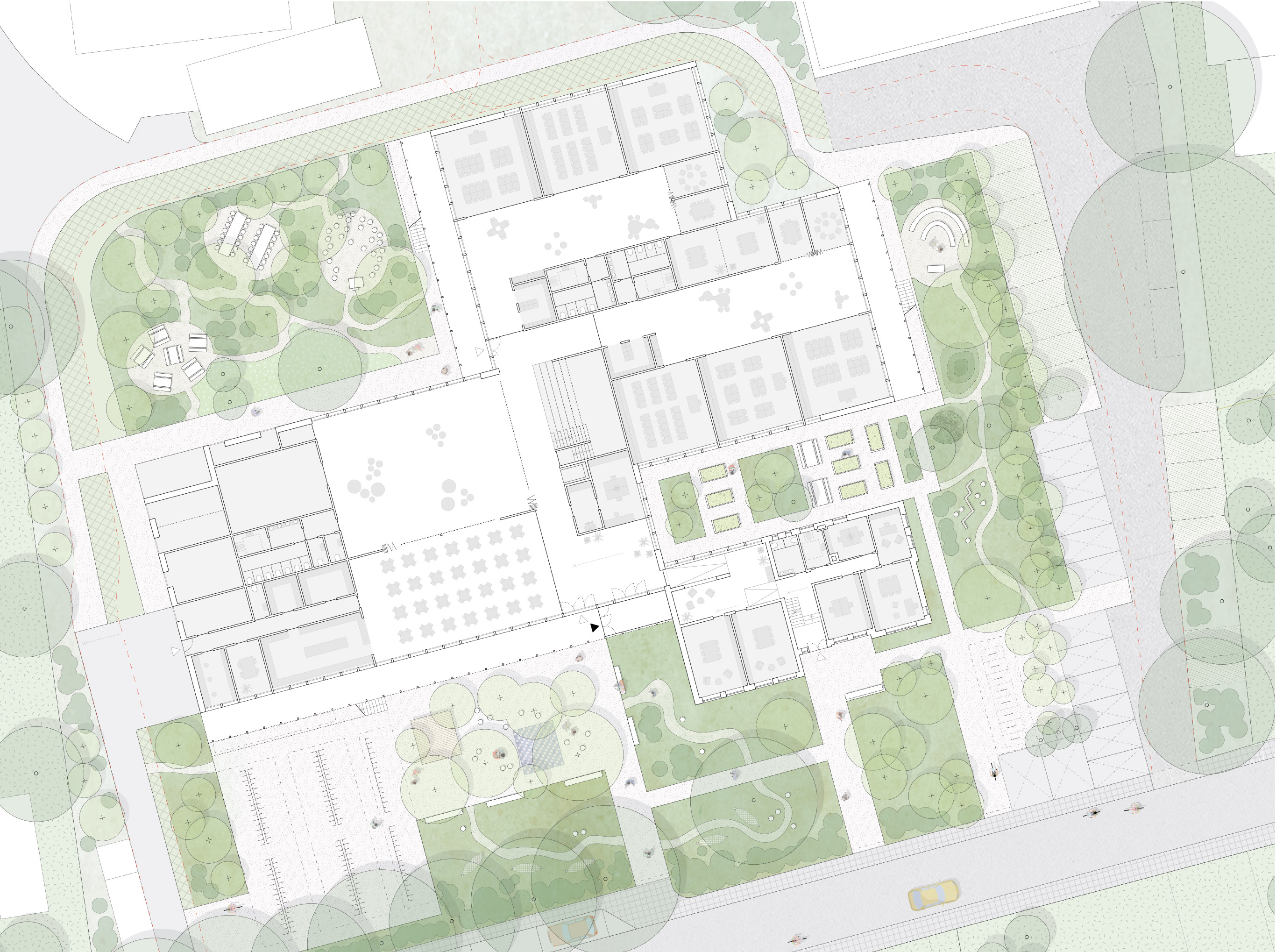
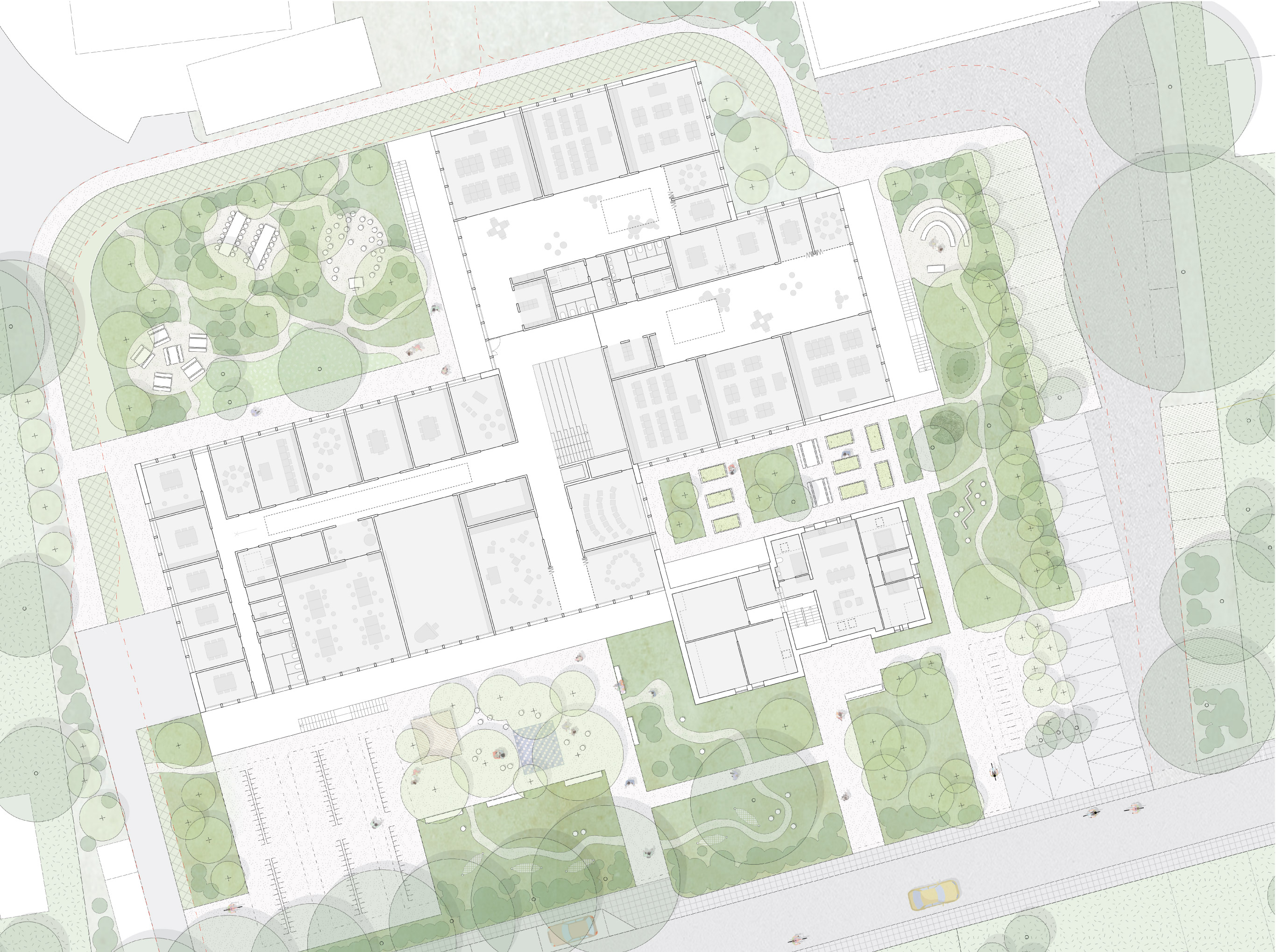
Through the main entrance, we come into the very heart of the school, formed by the cantine and hall with central, auditorium-like staircase, lit from the roof. It can be used separately from the rest of the school if needed. The classrooms are grouped into four clusters. Each of them consists of three classrooms, a common space with a skylight, and discrete service rooms. All clusters have direct access to the playground as well as the central hall. The layout has very few corridors, thanks to which the circulation within the building is clear and uncluttered. The room structures are multifunctional and can be used during the entire day. They allow for group activities as well as privacy and isolation if needed. Natural materials and versatility of spaces ensure durability, functionality and user-friendliness.
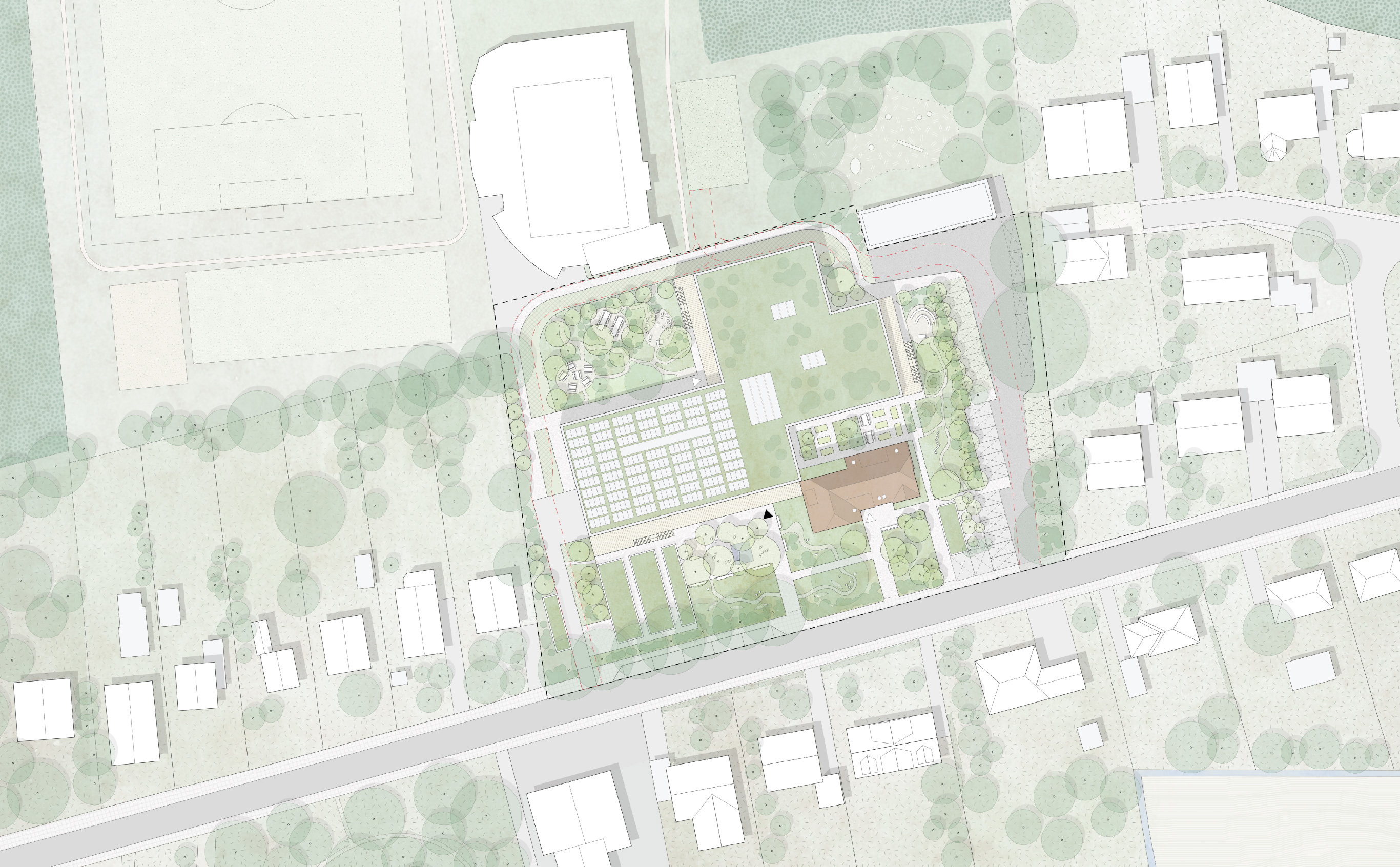
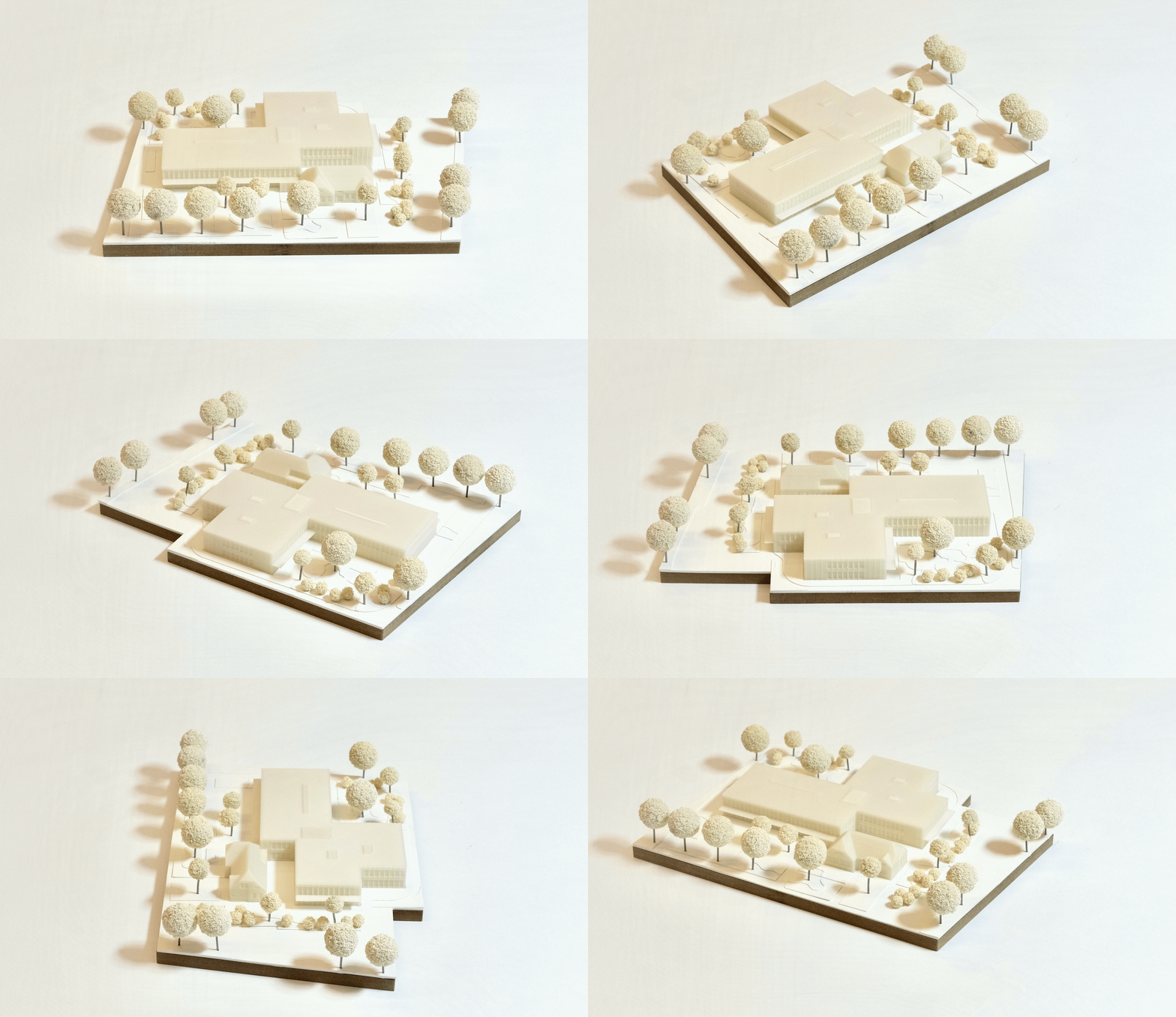
The polygonal outline of the building is a result of designing with priority to preserve the existing trees. This also elongates the facade, supplying the building with more daylight. With thoughtful arrangement of windows, the interior and exterior of the building can merge together, and the landscape becomes a part of the daily life of the school. The open spaces surround the building like a green ribbon, flowing around the entire complex. There are three types of outdoor spaces: the entrance square, the garden with a playground, and a vegetable garden. There are also four elliptical open-air classrooms that form a system of green spaces for learning, playing and relaxing. The greenery serves also as a protection from noises from the outside.
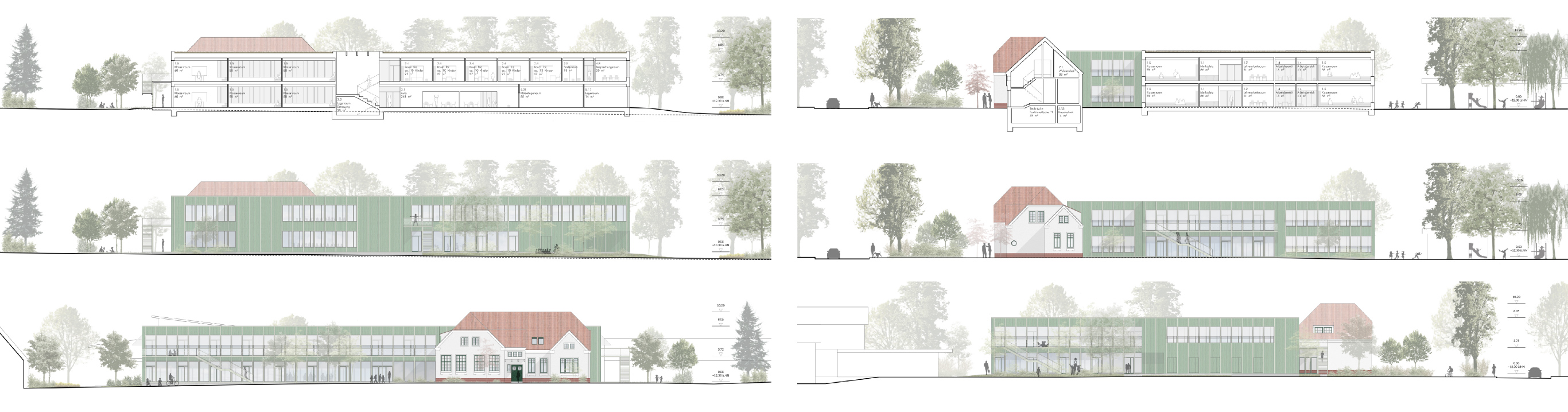
The shell of the new building, as well as the majority of its façades, is wooden. This guarantees not only good ecological balance, but also high aesthetic value and allows for prefabrication and short construction time on site. The color and rhythm of the façade incorporate elements of local architecture. The existing building will be renovated with care for its historical details.