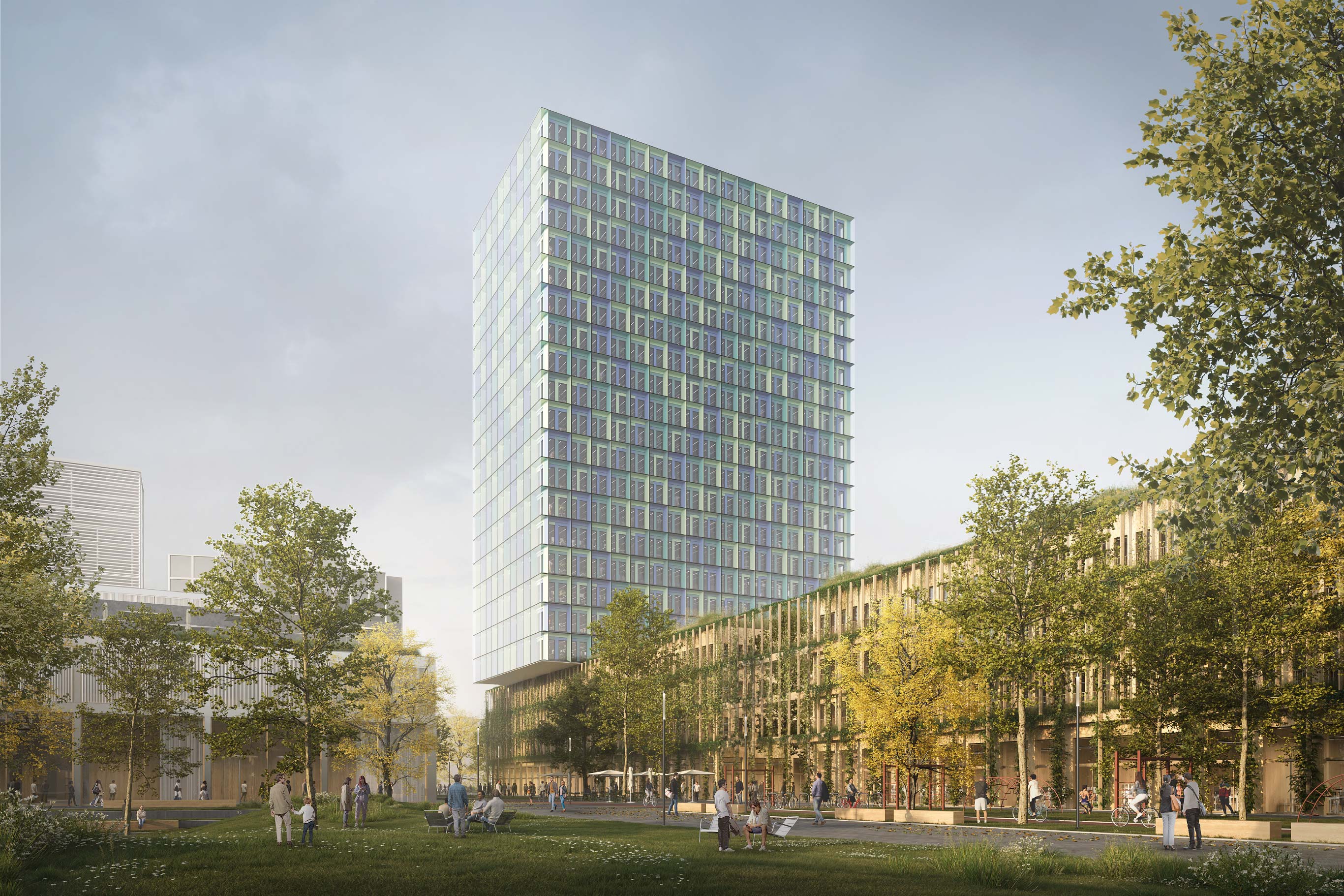
Conceptual design of an office building in Düsseldorf
| Location | Düsseldorf, Germany |
| Year | 2023 |
| Status | Closed competition |
| Client | Bau- und Liegenschaftsbetrieb NRW |
| Program | Authority building with auxiliary rooms, offices, cantine, underground parking |
| Area | 50.000 m2 |
| Team | Jola Starzak, Dawid Strębicki, Enrico Armentani, Bartłomiej Listosz, Kamila Jagieniak, Mikołaj Betka |
| In collaboration with | Architecture: Böll Architekten
Installations: INCO |
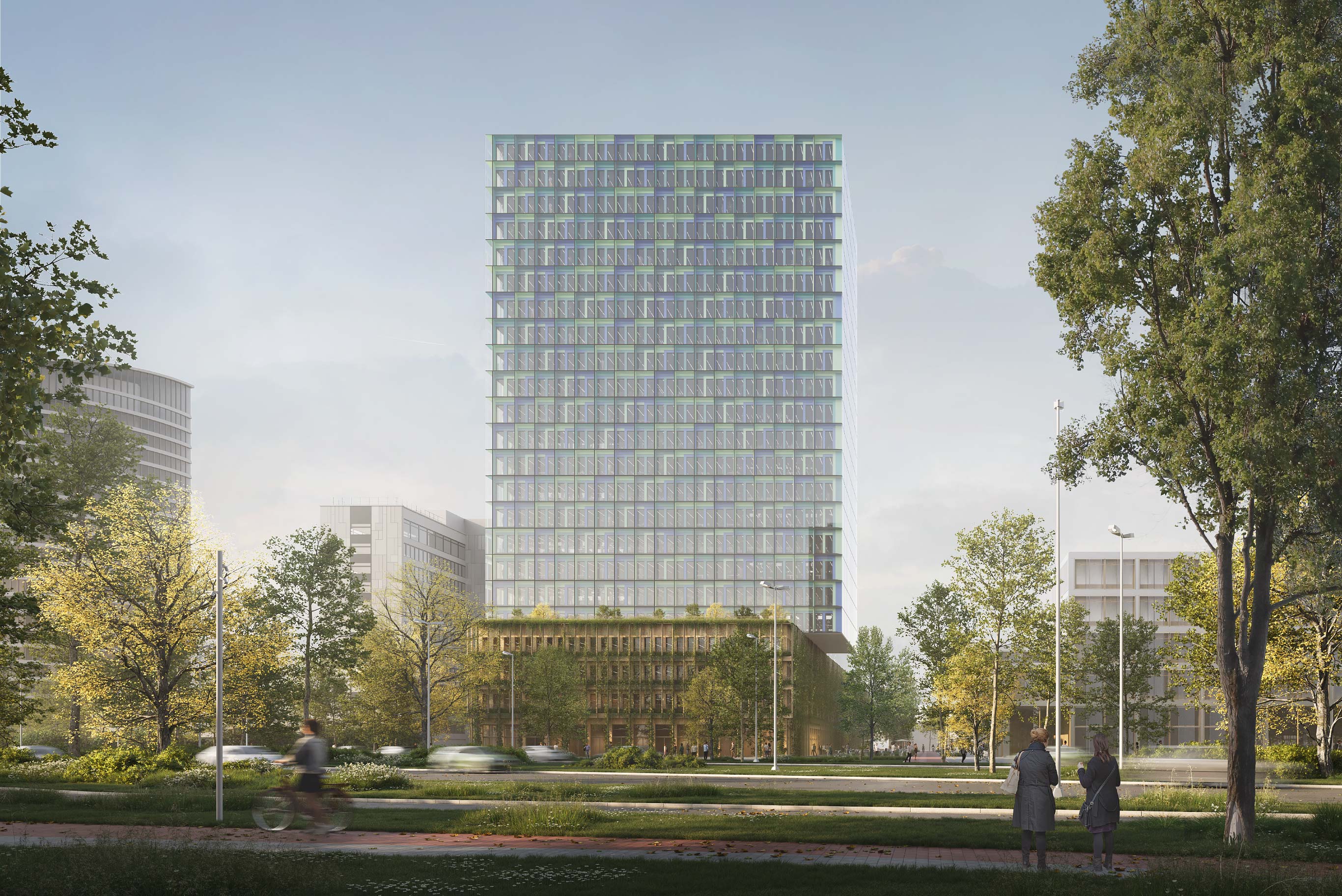
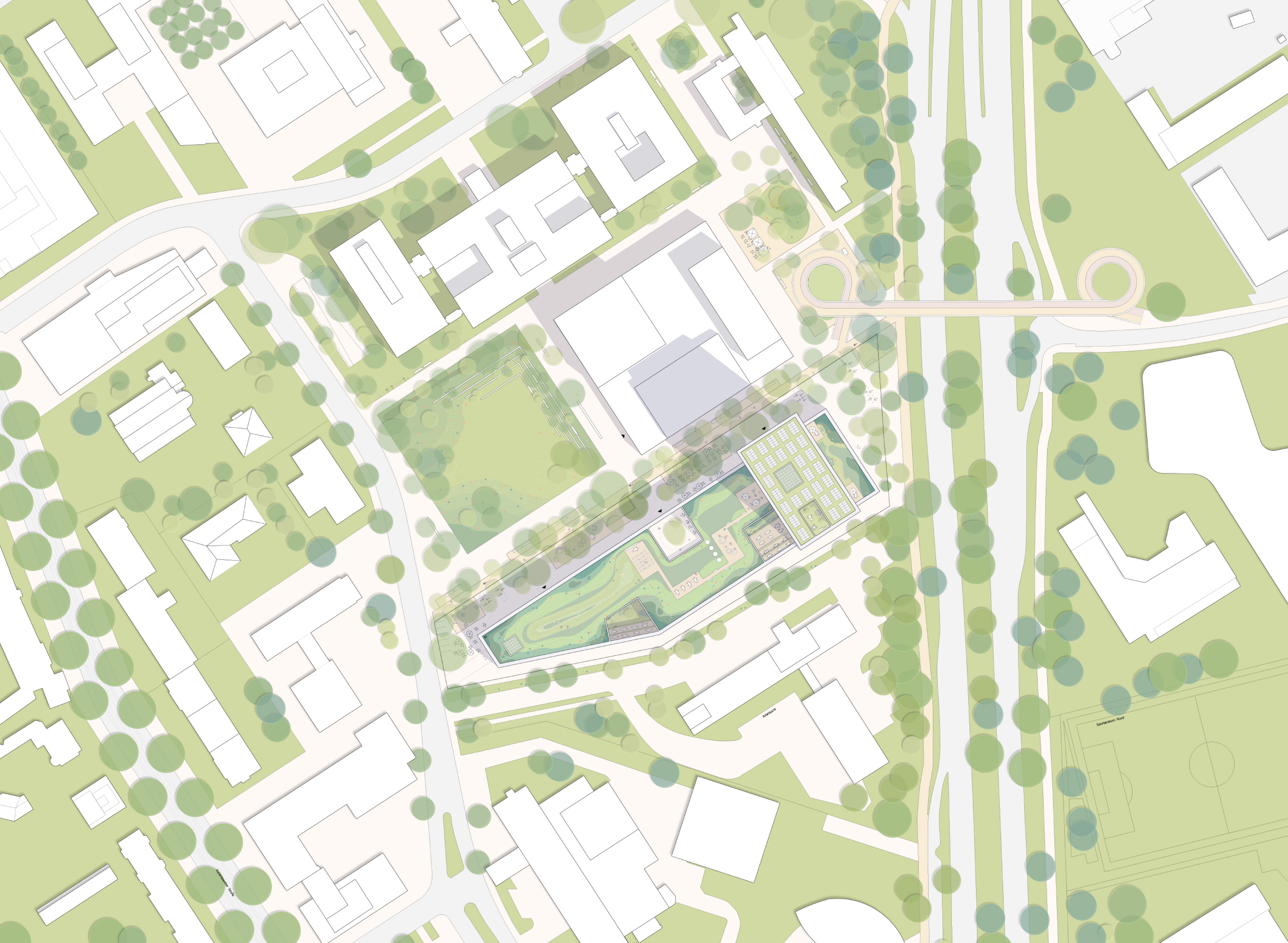
The designed government office building is located near one of the main roads of Düsseldorf, amongst lively and dense architecture of the city centre.
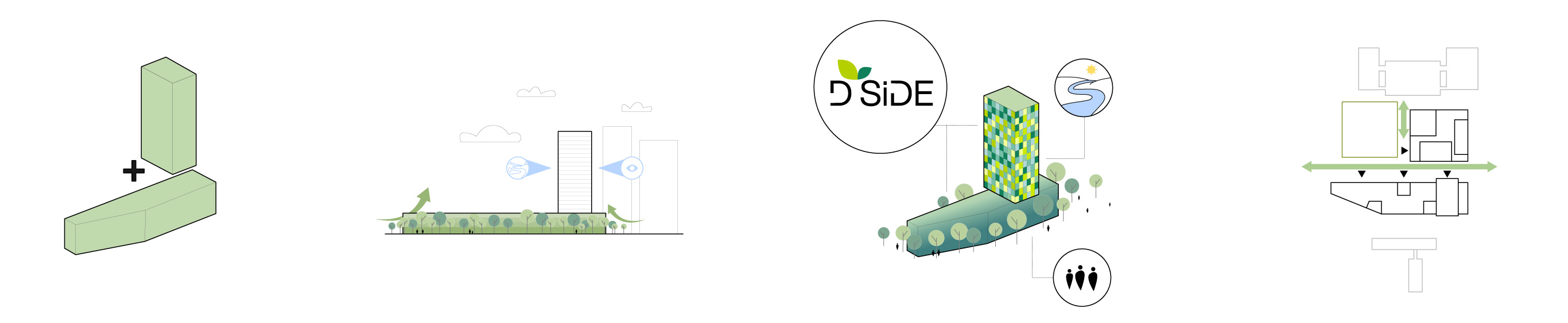
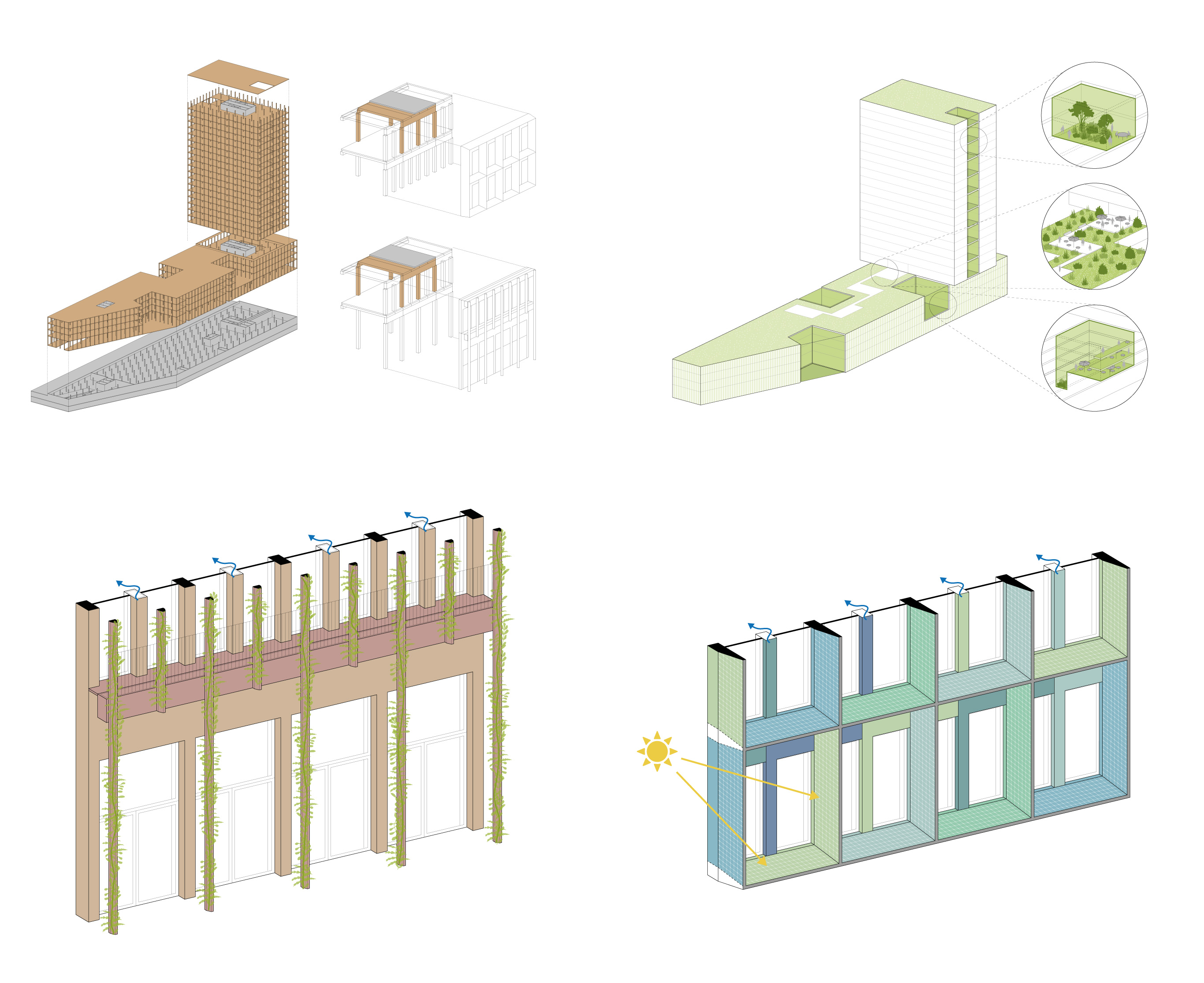
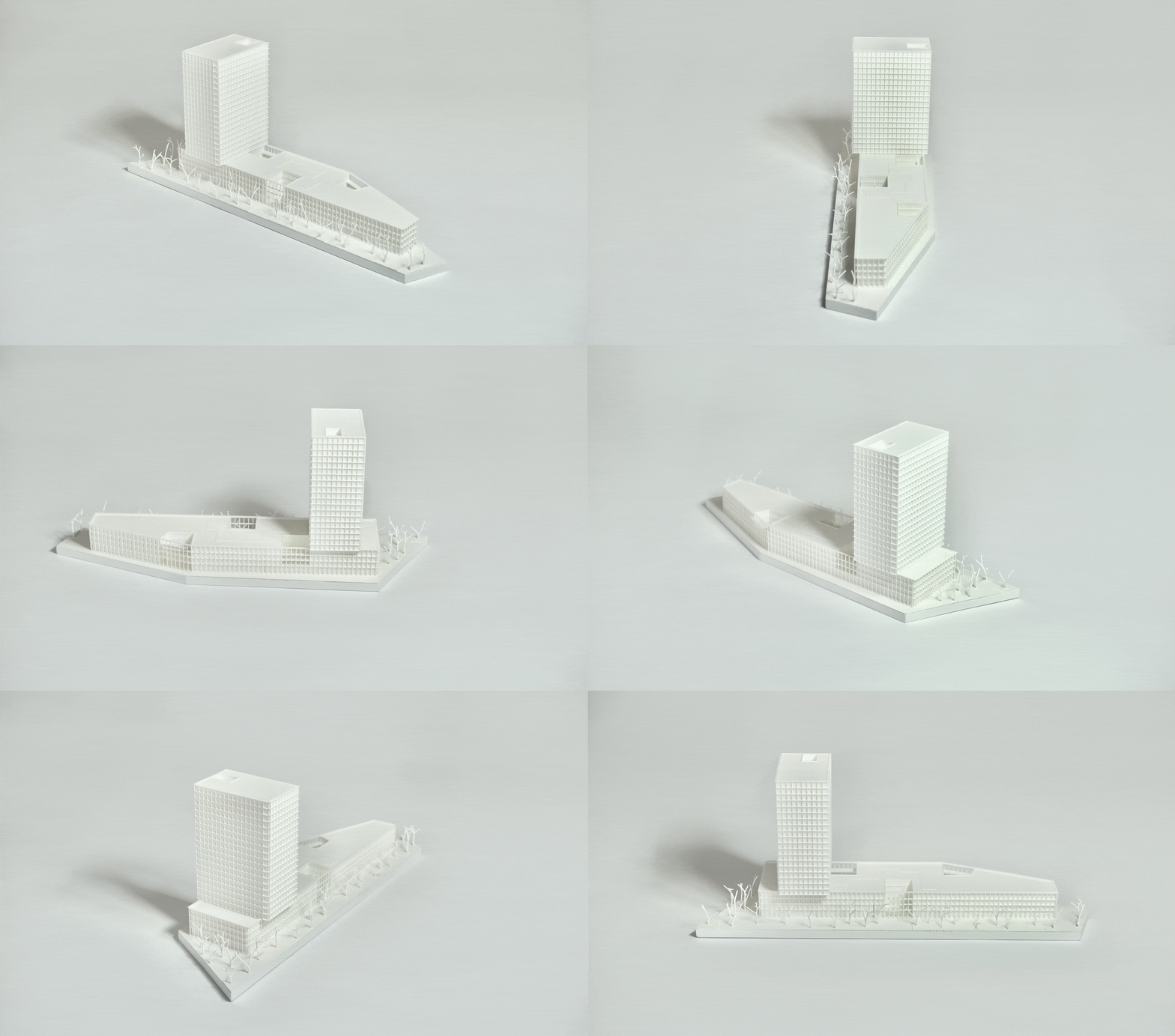
Its body consists of two elements - an elongated base and a tower, which are very different from each other. The base remains at eye level with the passers-by. This part is heavily greened on the inside and outside, which ties the building with the surrounding trees. The entire roof of this part is an open green terrace. The high-rise part, on the other hand, asserts itself on a metropolitan scale, and marks the presence of the project in the city skyline. The building remains in good proportion to scale of the development around.
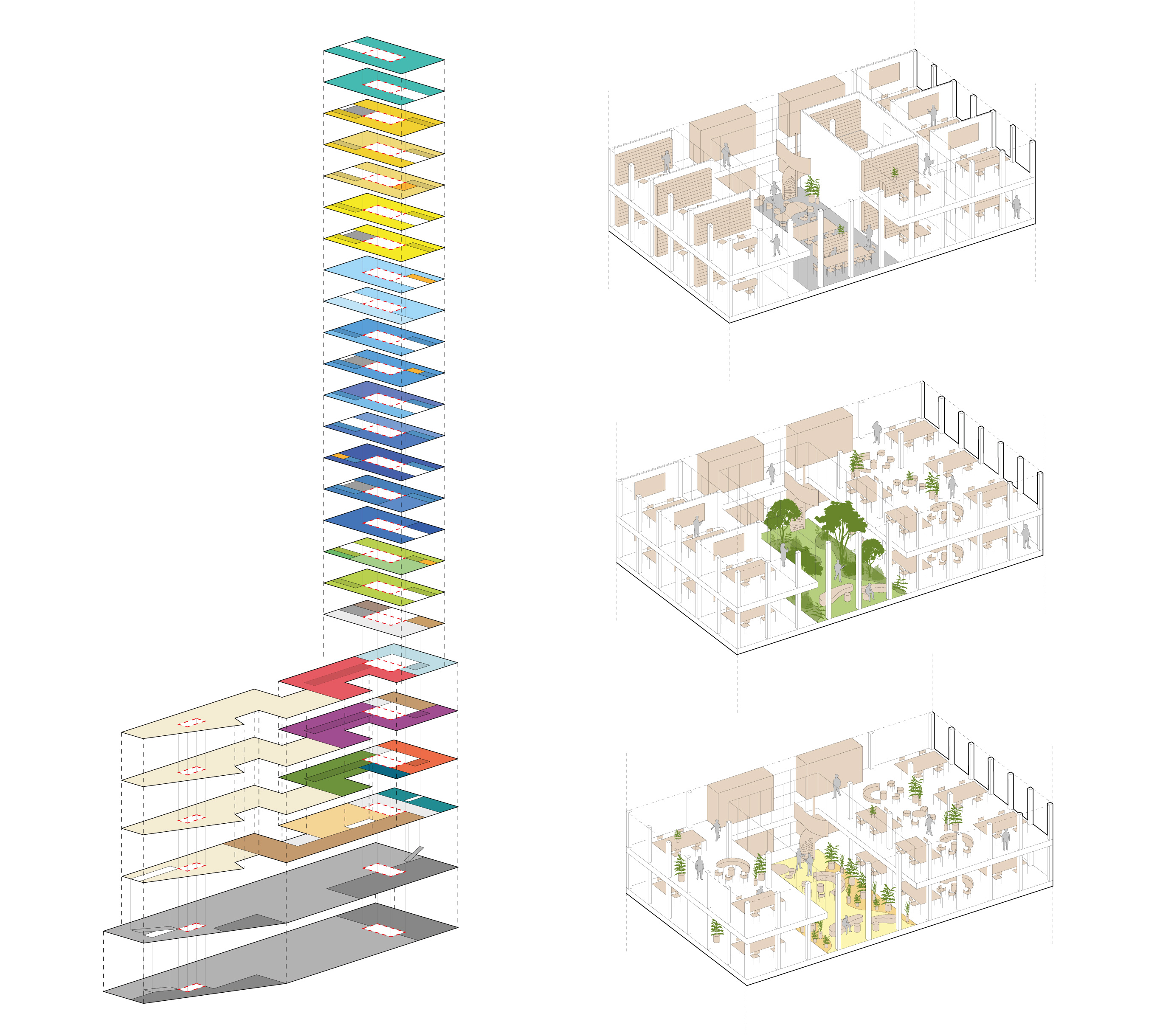
The ground floor of the building is available to the public with a cantine, multifunctional rooms and a coworking space. Three openings in the volume of the base act as common courtyards and allow sunlight deeper into the building.
The layout of the office areas aims to deliver simple and clearly zoned spaces. A mix of different office typologies is proposed. Thanks to possibility of easy spatial conversion, the building's long-term value and time resilience is ensured: the rooms are designed flexibly and can be changed in the future with simple means. The permanently installed areas with coffee niches, restrooms and installation shafts are located in the center of each floor. Informal zones with double-height ceilings can be used for individual as well as team activities. Combined with internal open staircases, they form an additional connection of the office floors and create new spatial and social connections. In the high-rise part, the double-height spaces appear in form of winter gardens, improving the views and air quality in the offices, and also providing extra spaces for work amongst greenery.
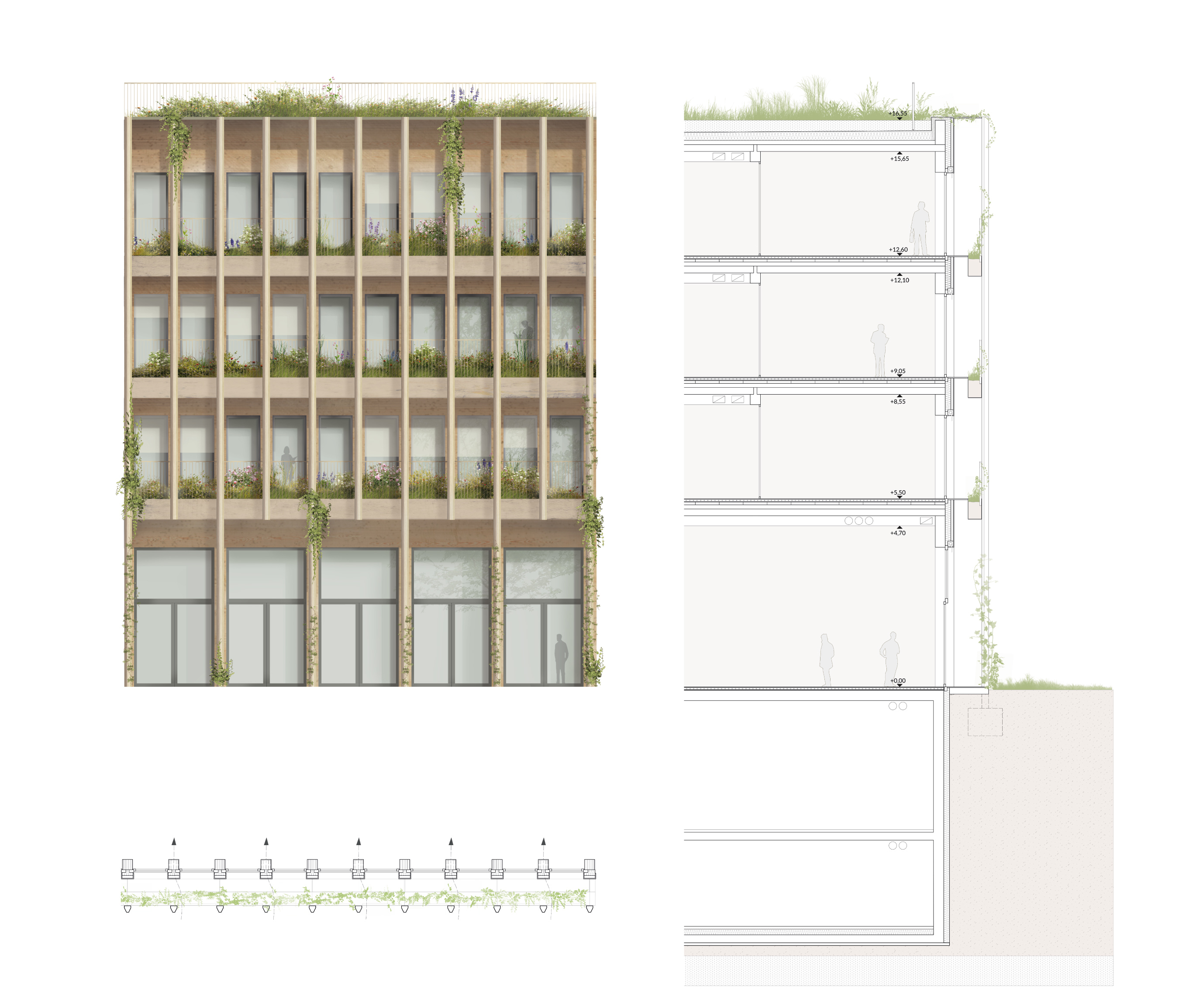
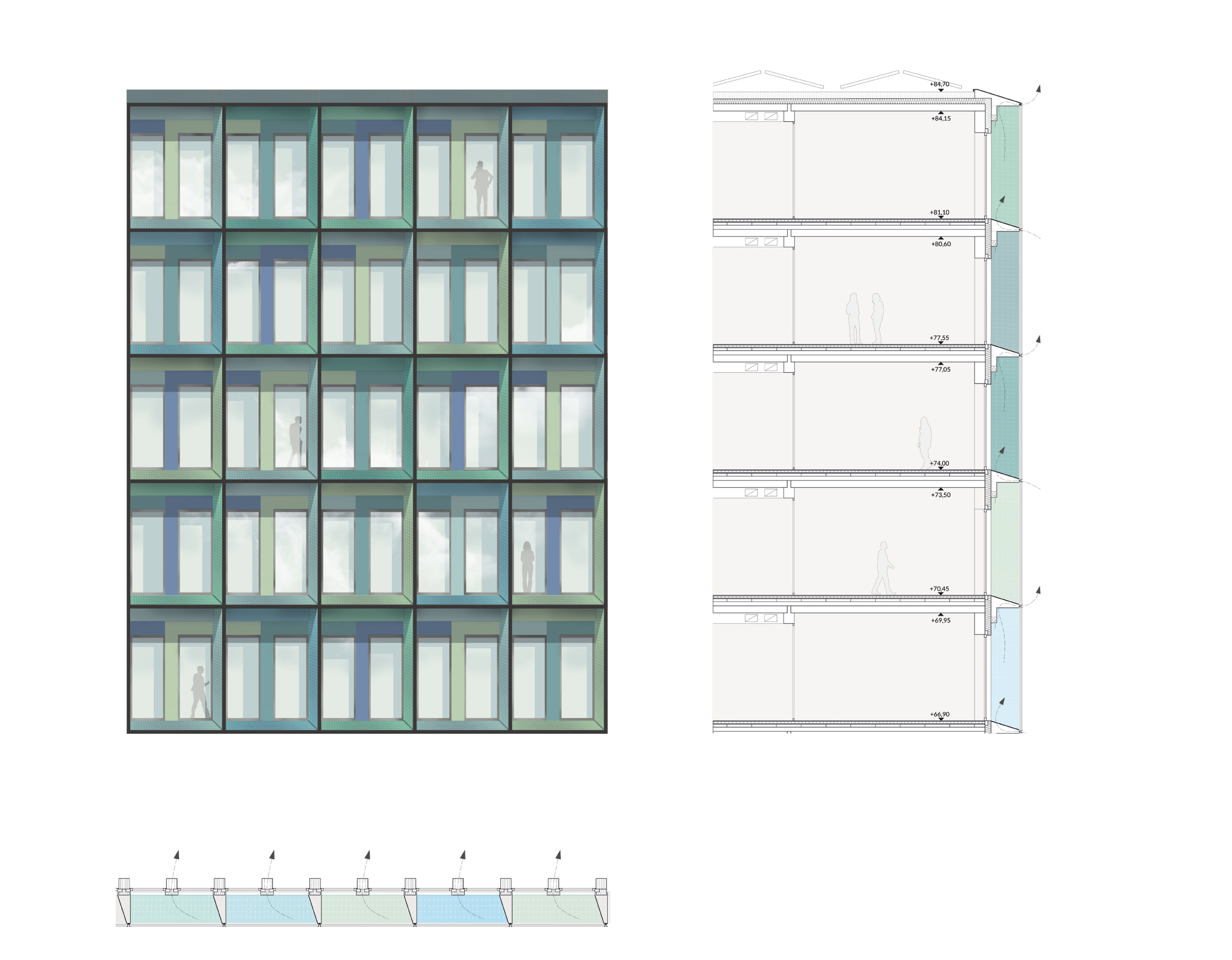
The differentiation of two parts of the building is also marked in the elevation - the base has a wooden façade with intense greening, while the tower’s exterior is formed by a glass curtain wall with colored photovoltaic panels integrated on those walls which are exposed to the sunlight. All façades are equipped with exterior shading system for convenient light and temperature adjustments.
An important issue in the project are the environmental aspects. Several solutions were applied to ensure sustainable design: limited use of concrete (achieved by hybrid, timber-concrete structure), use of solar energy in form of photovoltaic panels on the façades and the tower’s roof, natural ventilation and roof greening, which contributes to passive cooling and rainwater collection. Trees are planted around the building at the street level, which serves as a third, natural façade for the building, and can be irrigated by rainwater collected on the roofs. These energy management solution ensure high degree of self-sufficient energy supply. Proposed materials are highly durable in order to minimise building’s maintenance costs.