Design of a primary school in Böhlerleben district
| Location | Meerbusch, Germany |
| Year | 2023 |
| Status | Closed competition |
| Client | Stadt Meerbusch |
| Program | Classrooms, multifunctional rooms, cantine, green terraces, sports hall |
| Area | 7.900 m2 |
| Team | Jola Starzak, Dawid Strębicki, Enrico Armentani, Mikołaj Betka, Katarzyna Krawczyk, Agnieszka Thiel |
| In collaboration with |
Architecture: Böll Architekten |
The new elementary school in Böhlerleben is, apart from just a school building, an all-day learning and living space. The new building therefore responds to different needs. On one hand, it is supposed to be a quiet sanctuary where one can feel at home, a place for recovery from intense sensory impulses coming from the outside world. On the other hand, the building should also offer space for a variety of activities - group and individual, physical and mental; activities where students can naturally develop new skills through play.
For us, a sustainable building is not just a technological task. To ensure the long-term value of buildings, social aspects and users’ well-being must be ensured. That is only possible by delivering multifunctionality, flexibility and versatility in architecture. Therefore, we design a school where spaces can be used all throughout the day, where children can fulfill their needs and develop their interests.
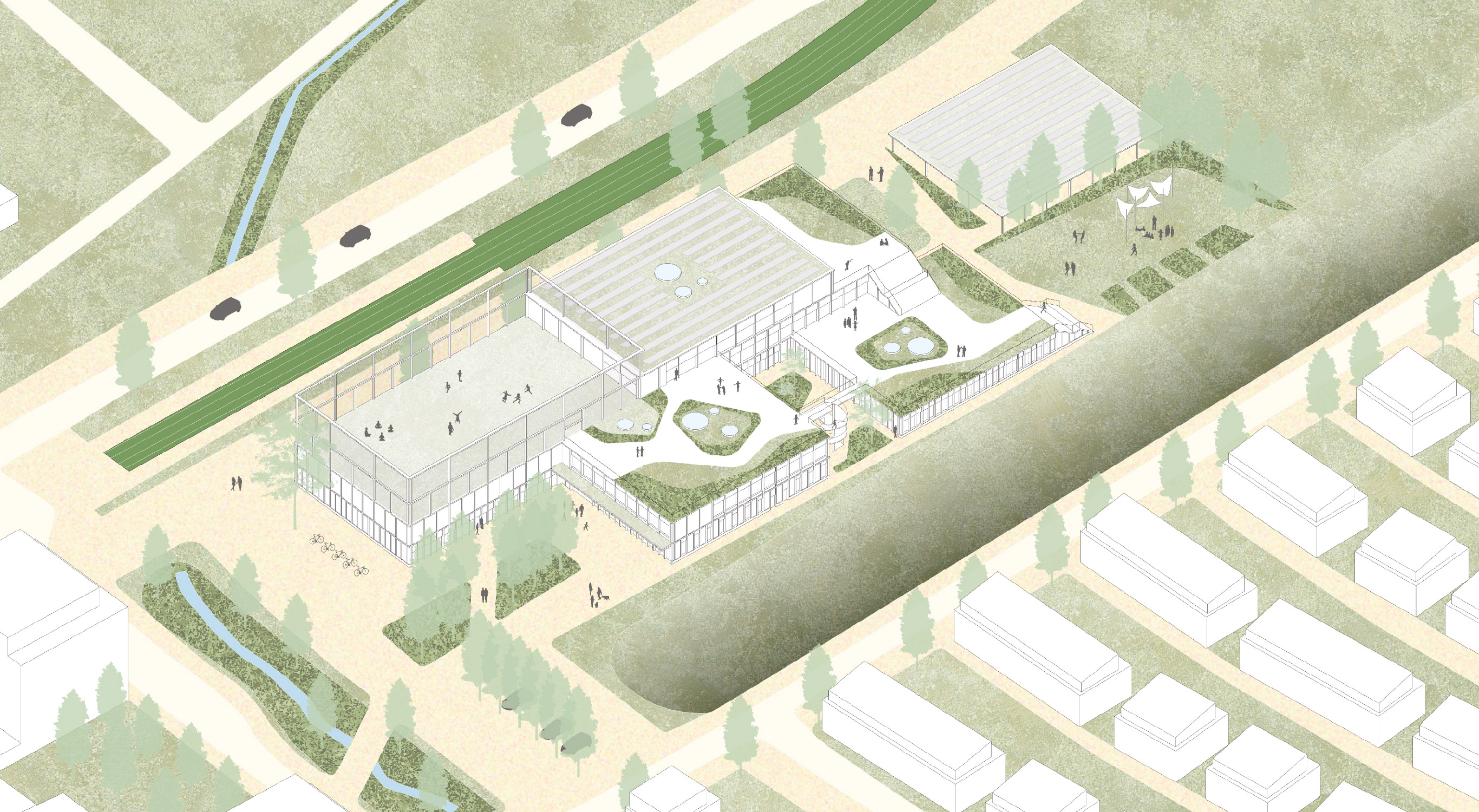
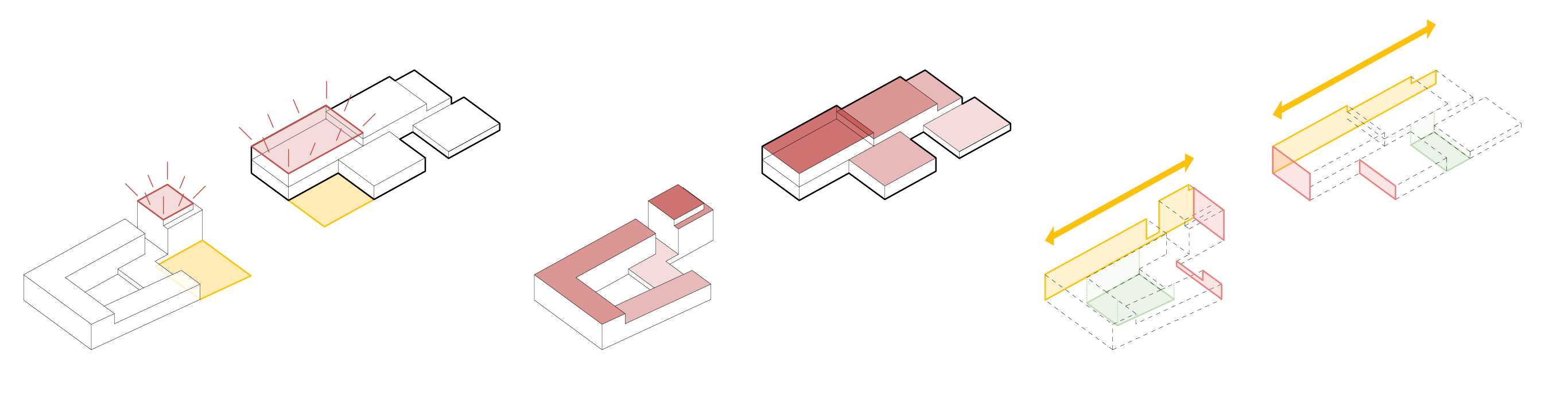
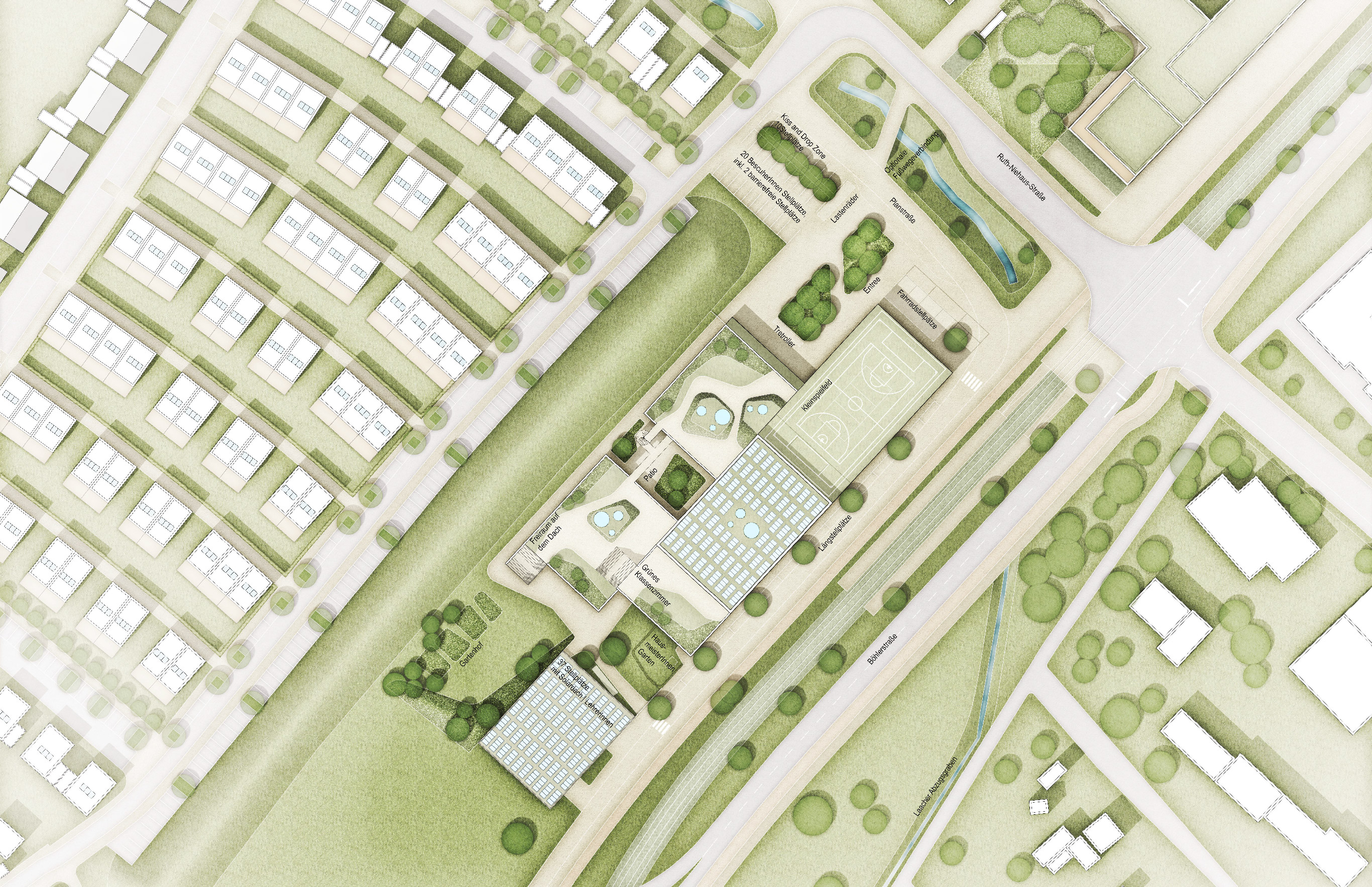
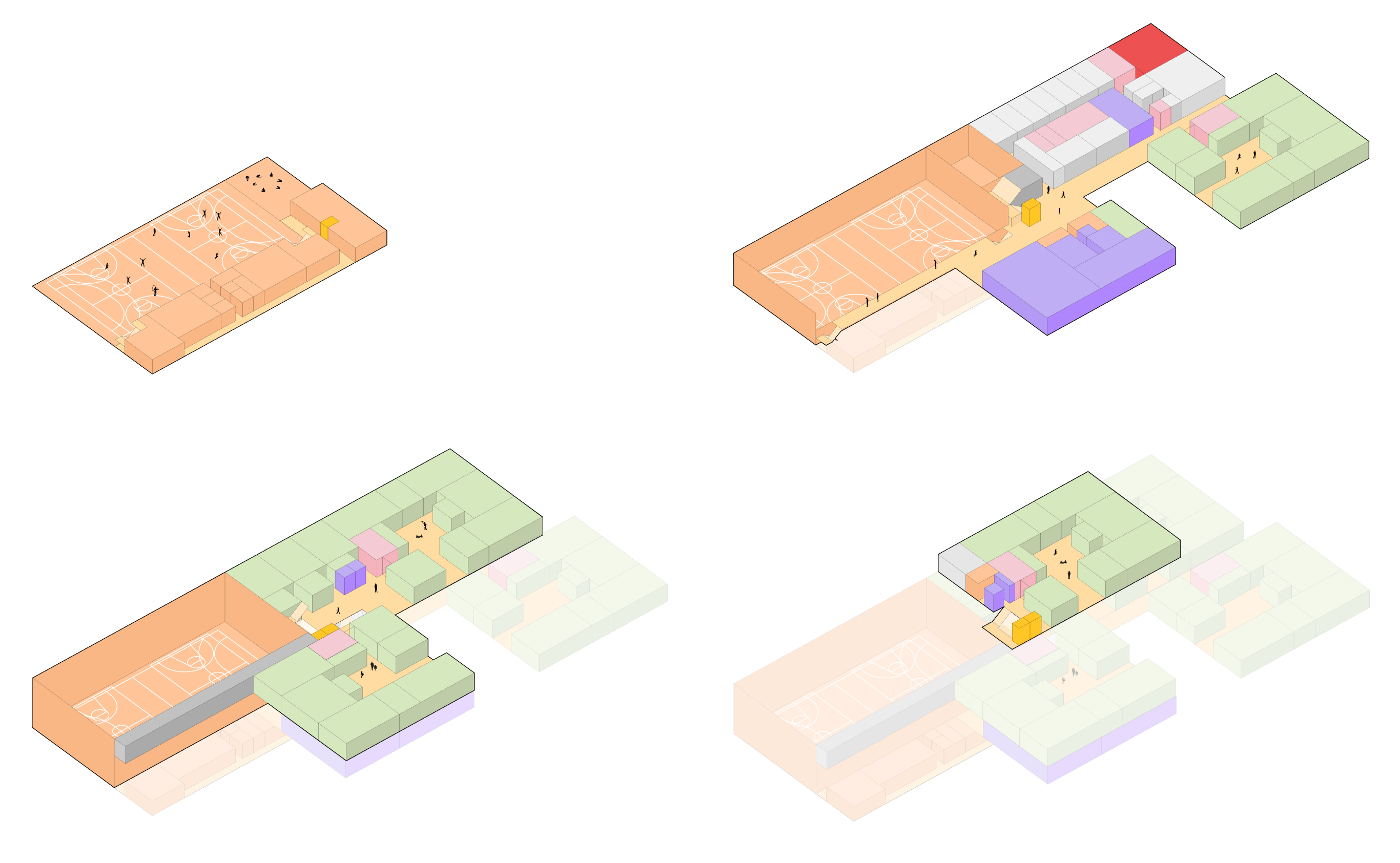
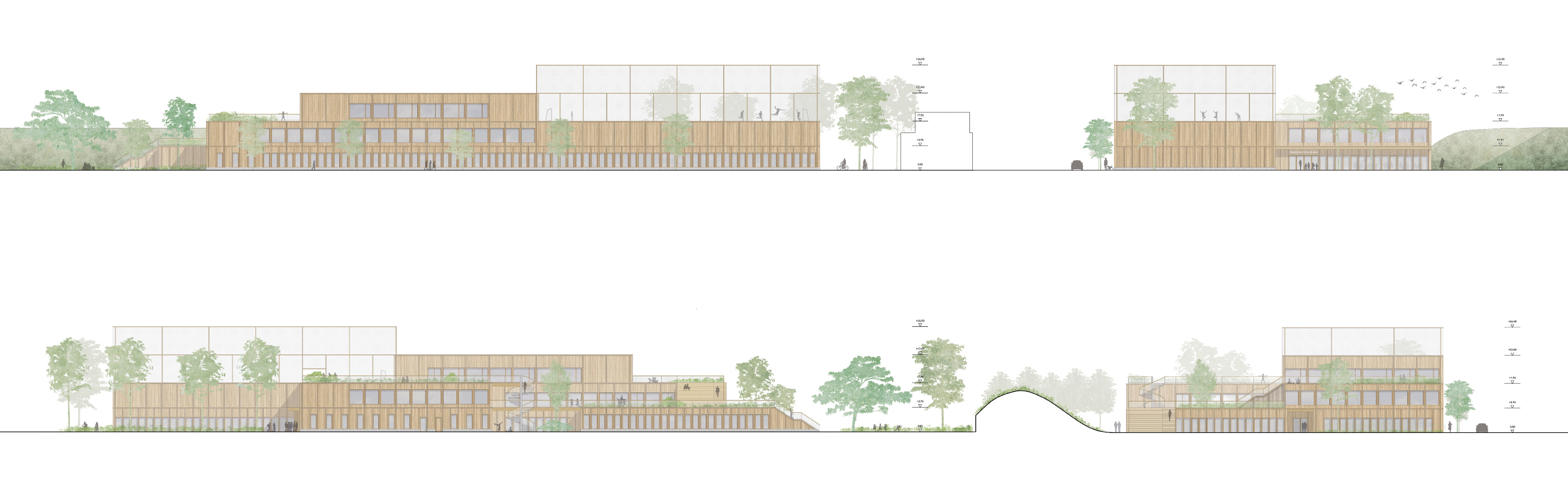
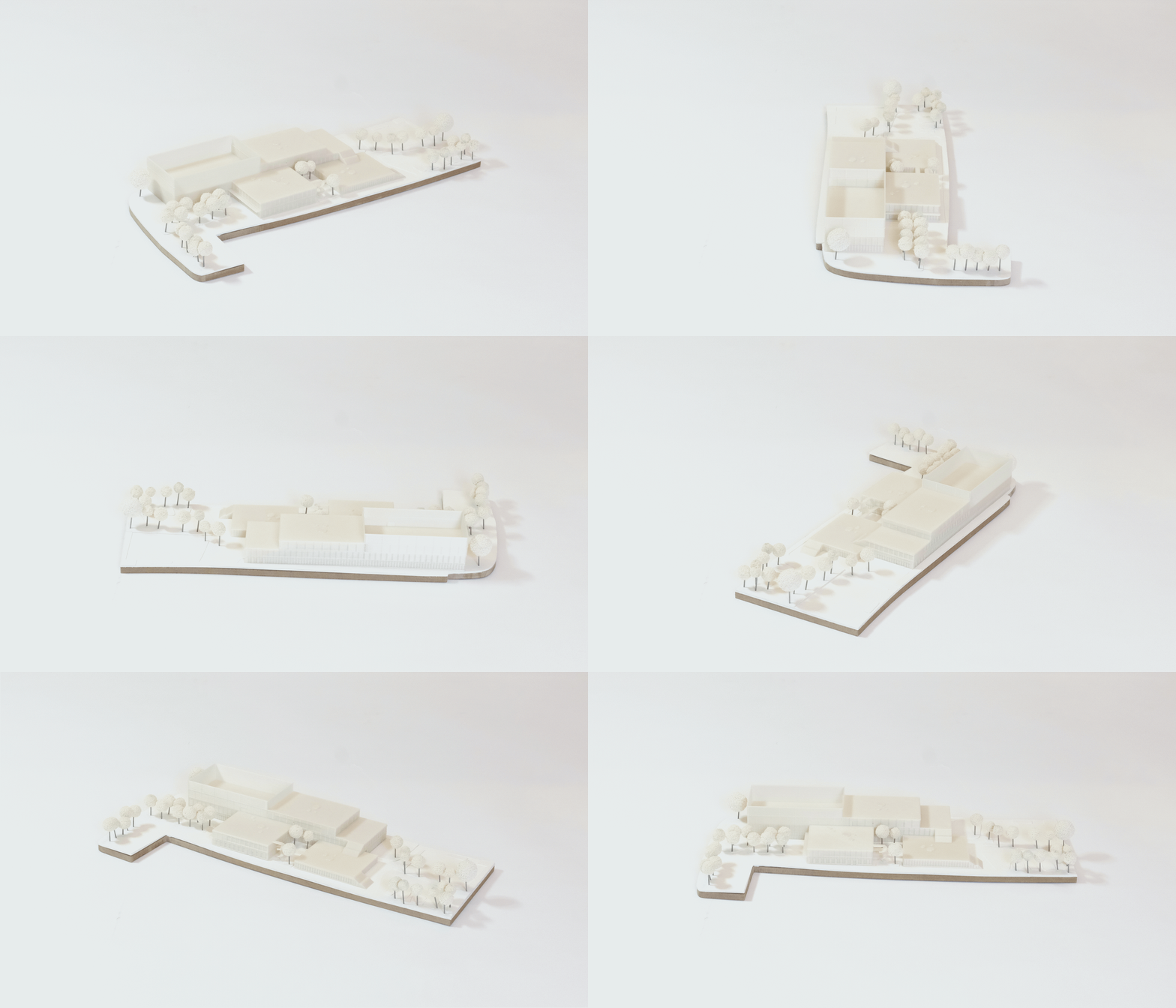
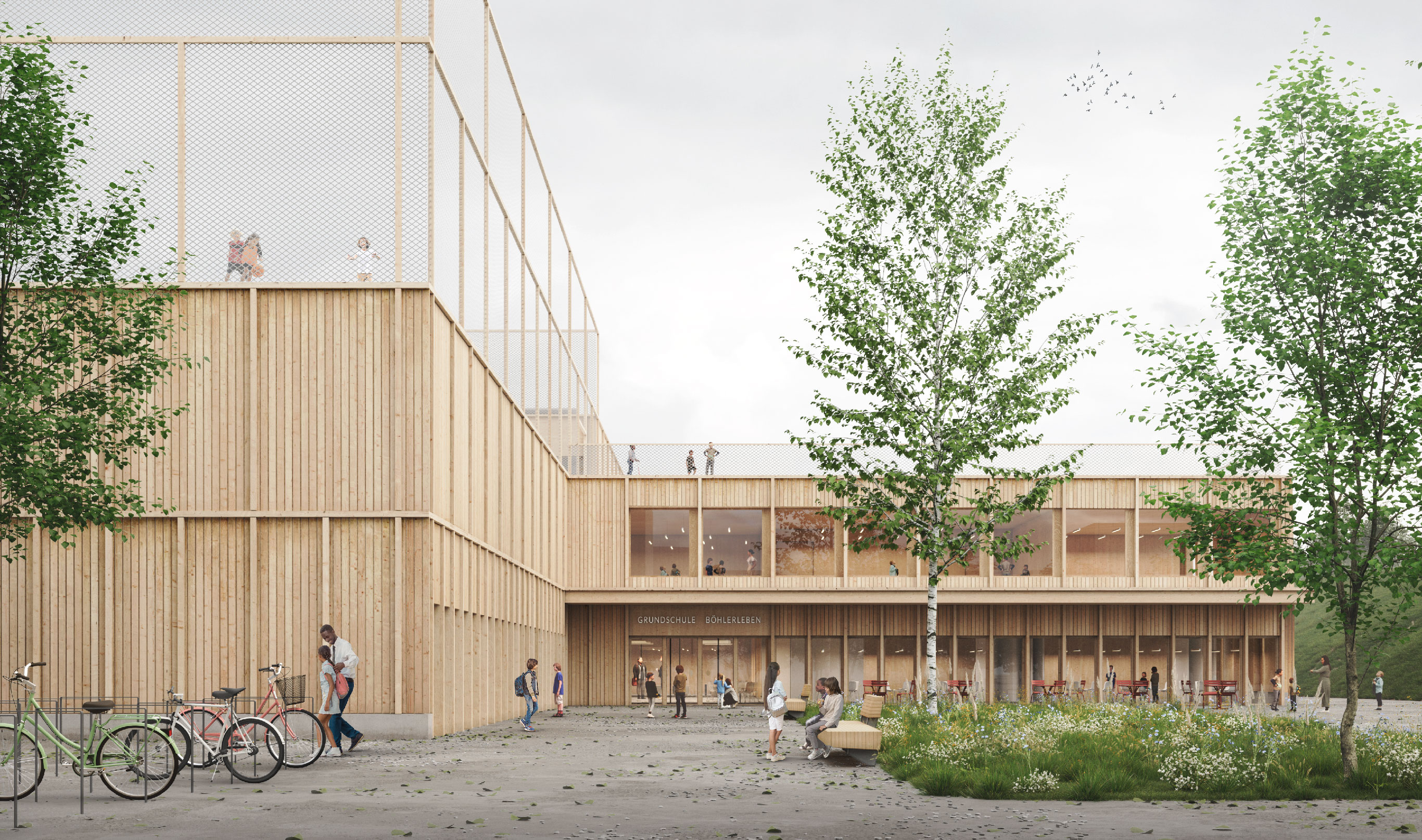
The new school, with its terraced form, relates to its northeastern neighbor with similar volume typology. Together, the two buildings form an elegant, welcoming gateway into the neighborhood with a green entrance and an inviting square. The geometry of the volume is elongated and forms a three-storey façade as well as height-differentiated components that define a series of outdoor spaces (playgrounds, gardens, roof terraces and inner courtyards). The floor plans are designed to minimize the area of corridors. Because of that, the circulation areas on the upper floors take wider forms, more spacious that enhance the informal life of the school community. The corridor on the first floor acts as an axis, or an internal street that runs through the entire building and invites the users to explore different interior and exterior spaces. The placement of different functions makes it possible to divide the building into clear segments and use these functions at different times. This also allows to use the sports hall or canteen after school hours or during the weekends.
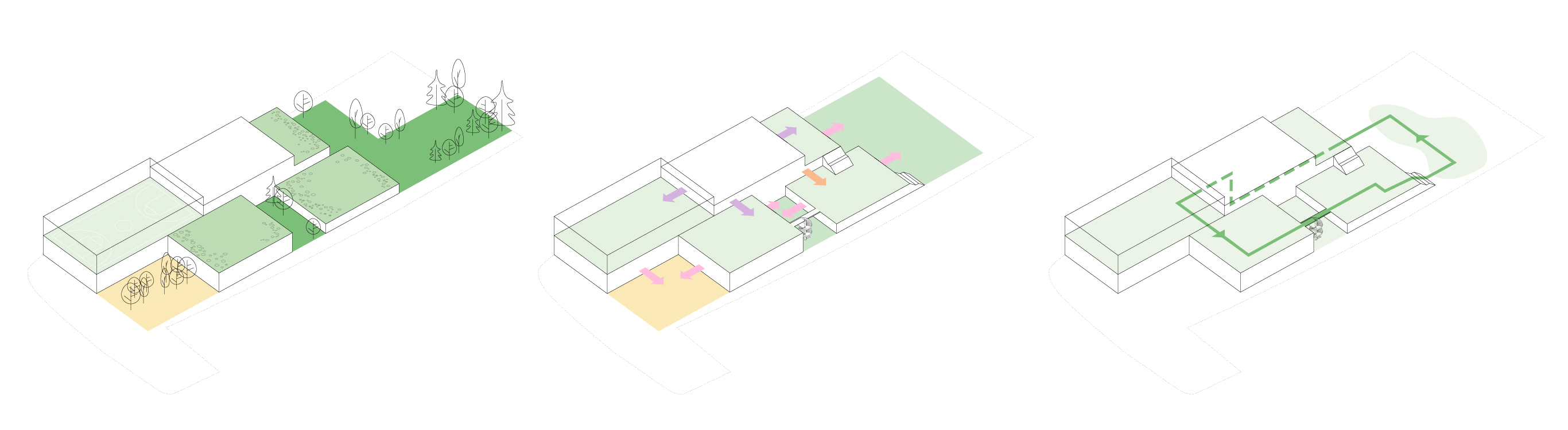
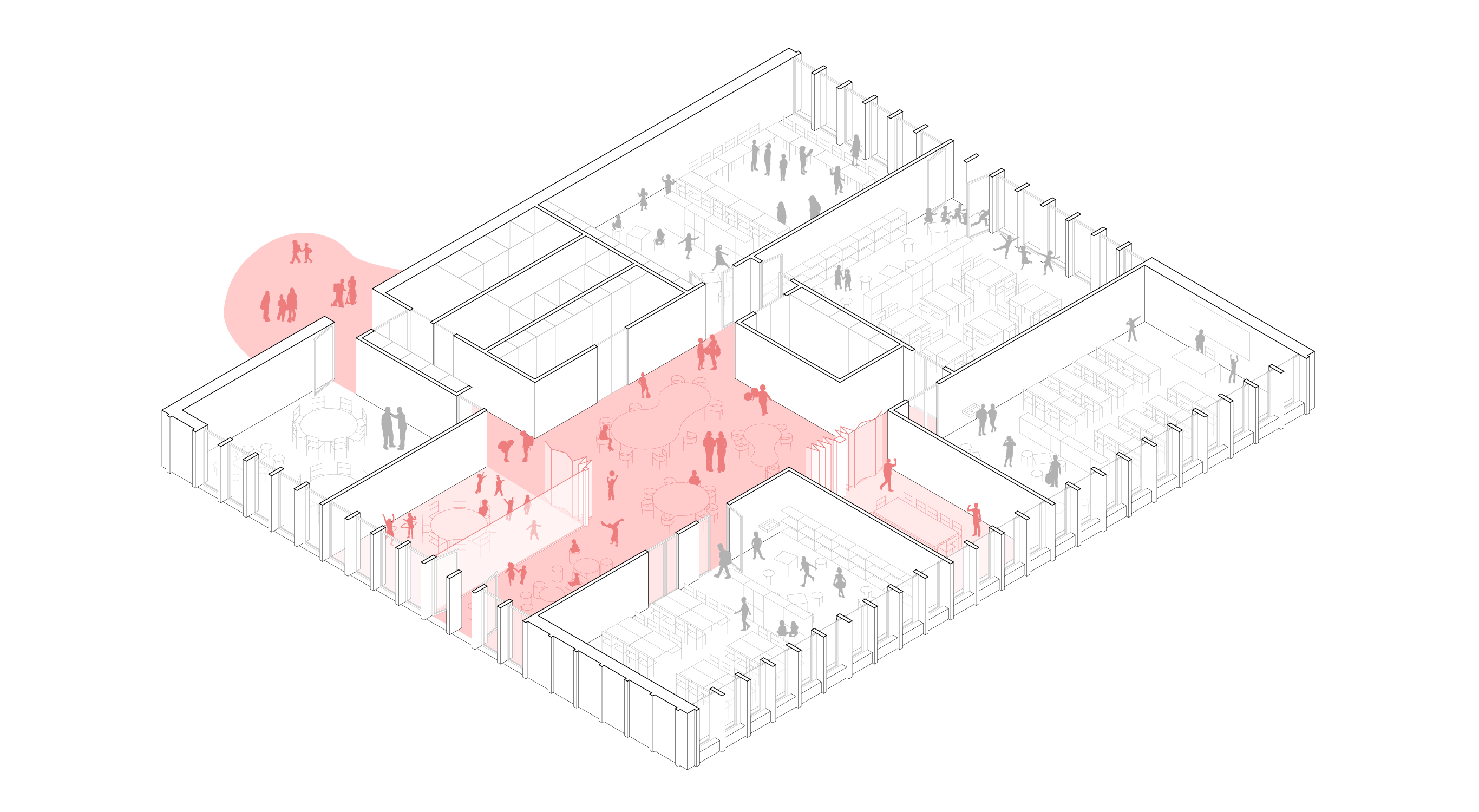
The four class areas are very important elements of the overall spatial concept of the building layout. They are divided into four groups (clusters) between three floors according to the pupils’ age. All clusters have the same spatial organization with functions located around the central marketplace, which is lit by skylights and offers direct access to the outdoor spaces. Such organization of the program creates attractive exploration possibilities for the children. They can walk from their clusters across the roofs into the garden and large playground. This forms a loop that allows the children to move freely between the clusters and outdoor areas, offering a variety of activities and views from different levels. To enable this free movement, there are various staircases located inside and outside the building. They serve not only as circulation areas - they can also be used as an auditorium.
The open space surrounds the new elementary school with flowing forms, breaking the orthogonality of the building. The planned road will be designed as a semi-public shared space. A garden courtyard for the new elementary school is primarily dominated by greenery. In addition, the green terraces on the roofs and the patio on the first floor offer more sheltered outdoor spaces that are assigned to the individual clusters. In addition to various play areas, there are numerous recreational facilities and a green classroom for outdoor lessons. The grass and shrubs on the forecourt, in the patio and on the roof are designed according to the 'sponge city principle’ - water is naturally fed to the plants and stored temporarily. Green areas and roofs are designed to also be a part of the water retention program.
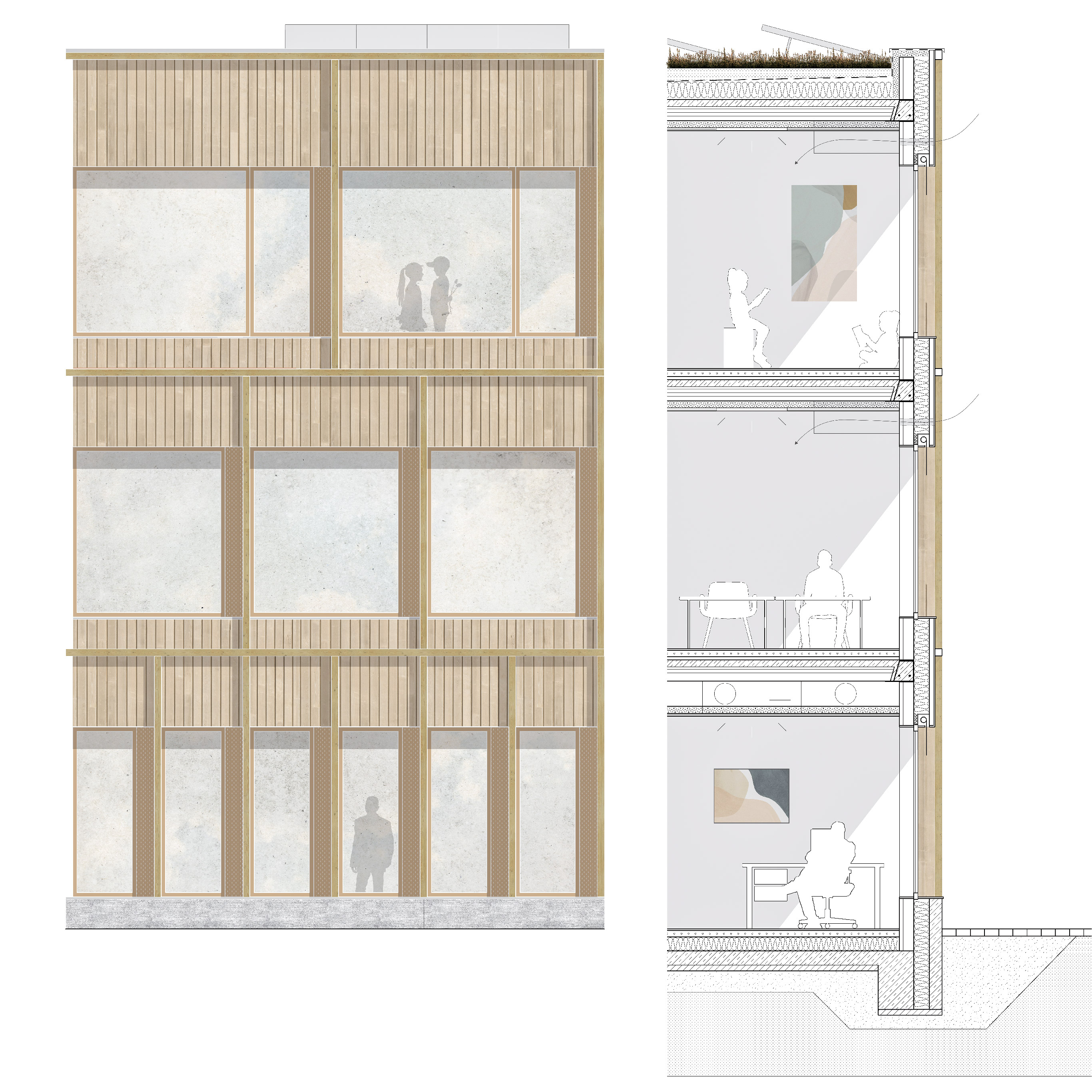
The school has a timber-hybrid structure with stiffening walls in solid construction, combined with timber-concrete composite ceilings and timber columns. Used solutions ensure energy saving, low heat losses and low CO2 emissions. The building also has a favorable A/V ratio.