Urban development concept for Weihersberg district
| Location | Stein, Germany |
| Year | 2023 |
| Status | Closed competition |
| Client | Stadt Stein |
| Program |
Residential neighborhood with varied typology and scale, school, daycare, offices, services, sports and recreation facilities, green areas |
| Area | 230.000 m2 |
| Team | Jola Starzak, Dawid Strębicki, Katarzyna Krawczyk, Mikołaj Betka, Vitalii Skalatskyi, Margareta Ohnsorge |
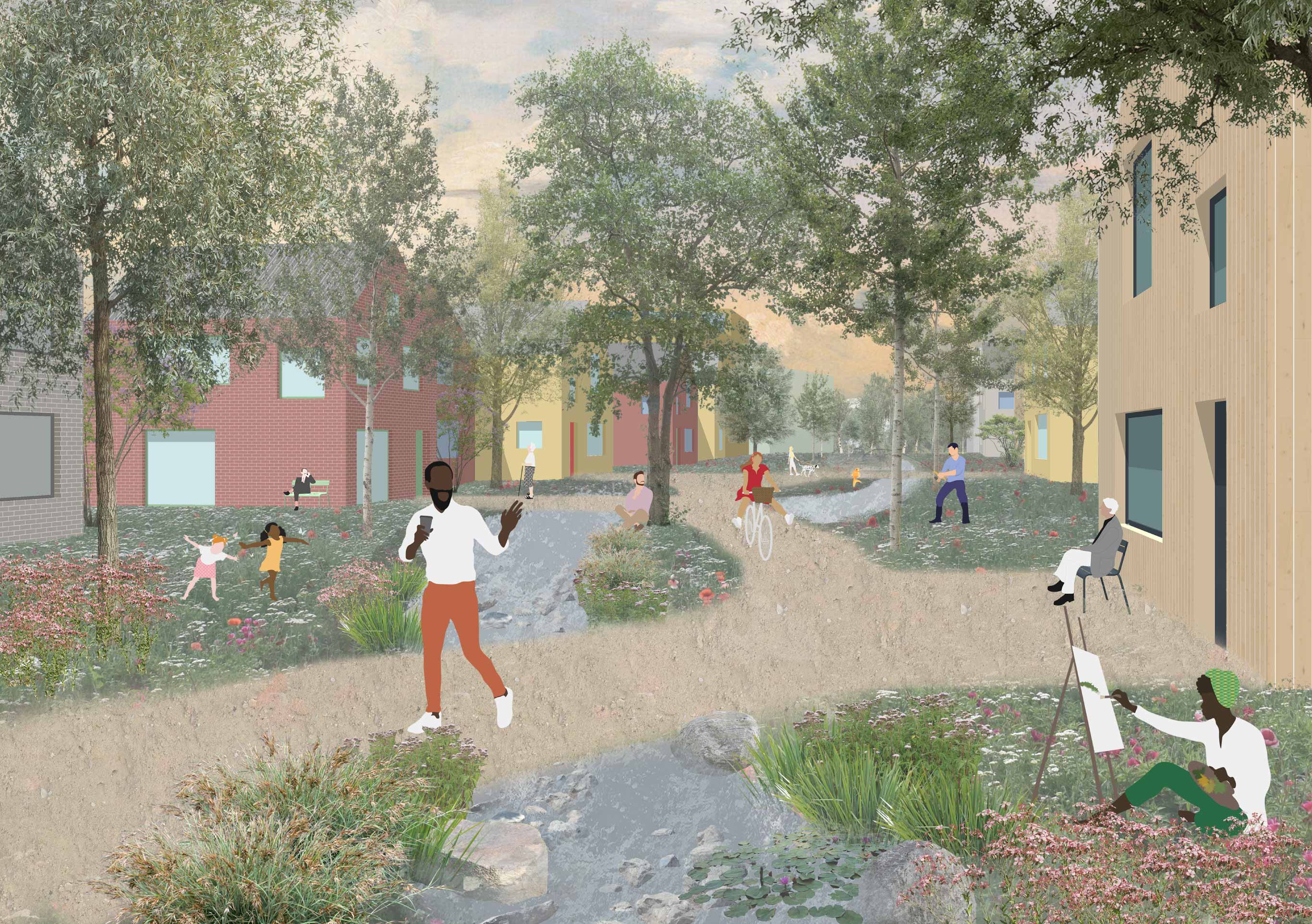
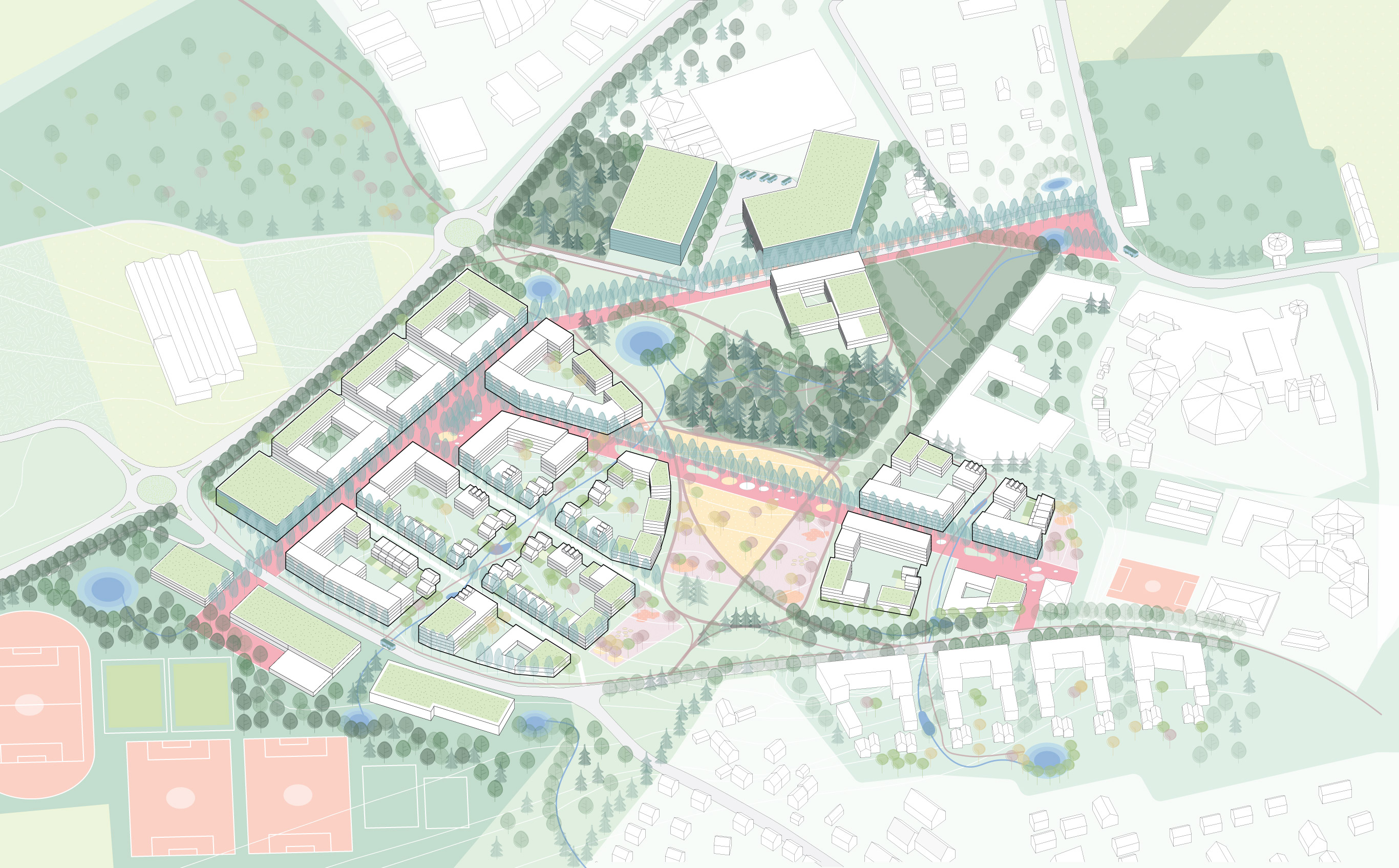
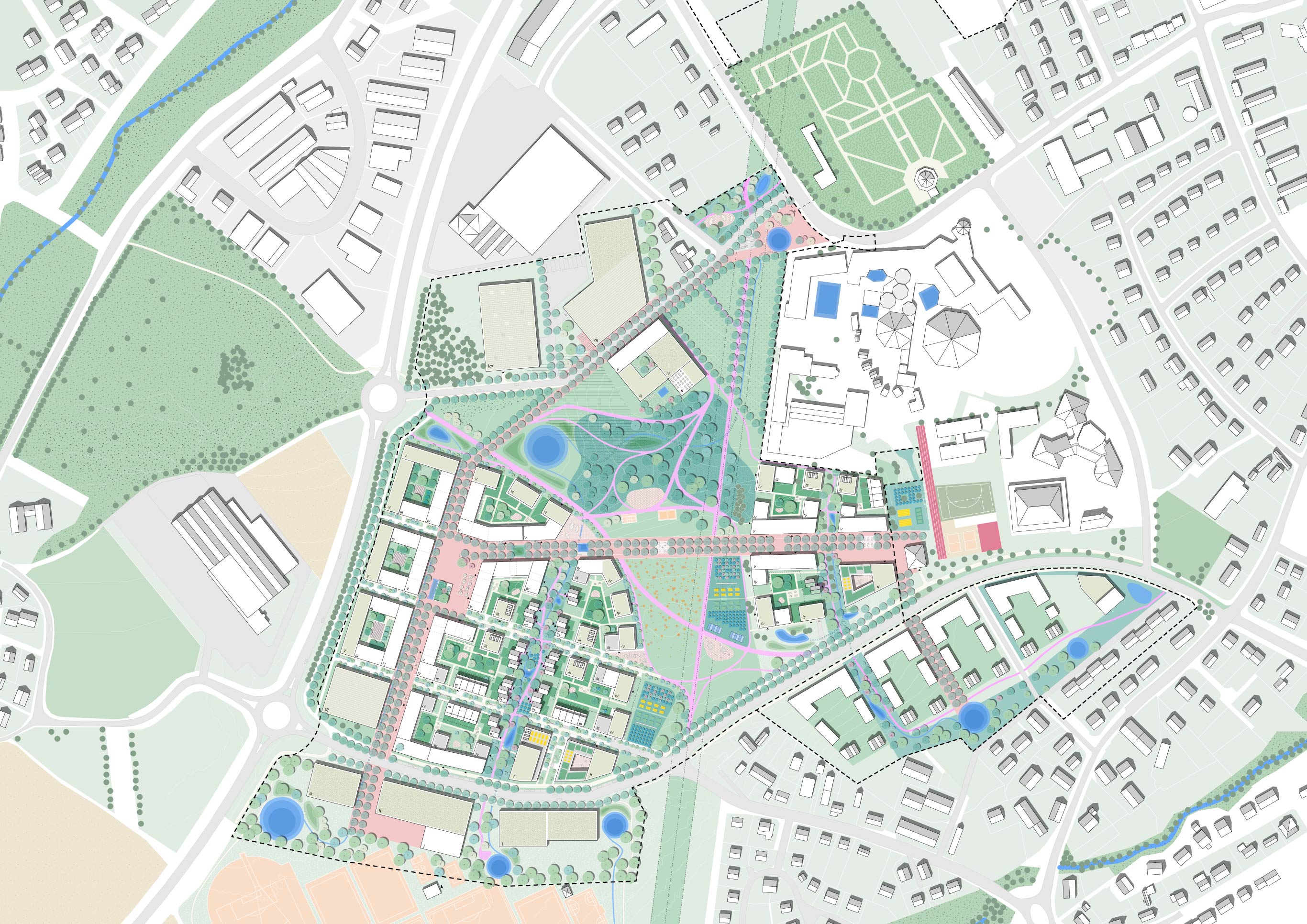
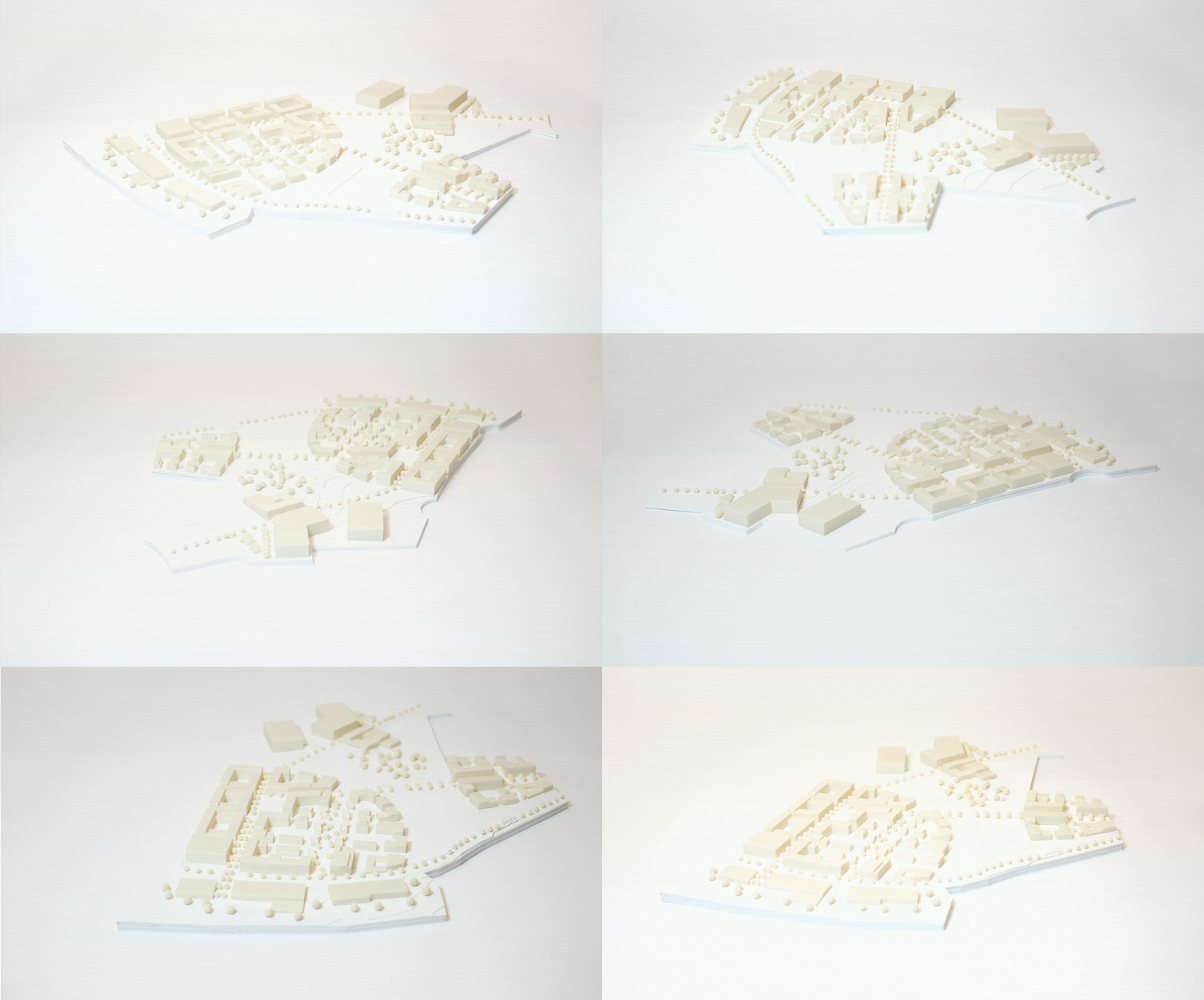
The development project for Weihersberg turns the area into an environmentally friendly, hybrid neighbourhood. In addition to residential uses, functions such as work, shopping, education and services will be accommodated in a variety of different types. The quarter is completed by recreational facilities in the surrounding green spaces. The project creates a basis for a city of short distances with a lively, socially differentiated neighbourhood. The existing and newly designed buildings are integrated together to form a unique urban structure.
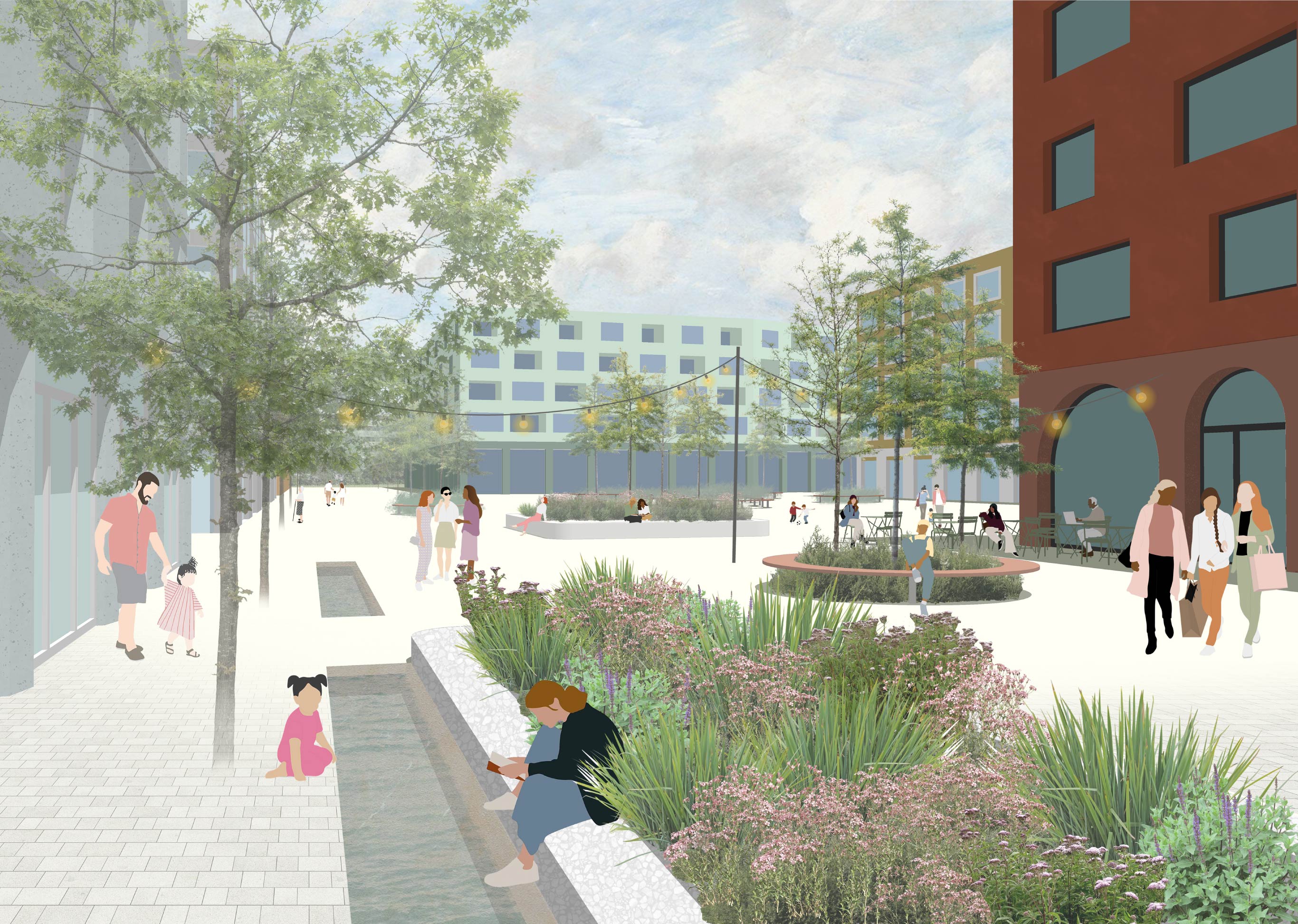
Here, the landscape plays the main role - we build in the space in between. The urban blocks are connected and benefit from direct access to various green, pedestrian and cycle friendly zones. Together with the sequence of public squares and spaces between the city blocks, this creates a network of alleyways, streets, paths and squares that connect all elements to form a neighbourhood with a unique character and spacious views towards the surrounding landscape.
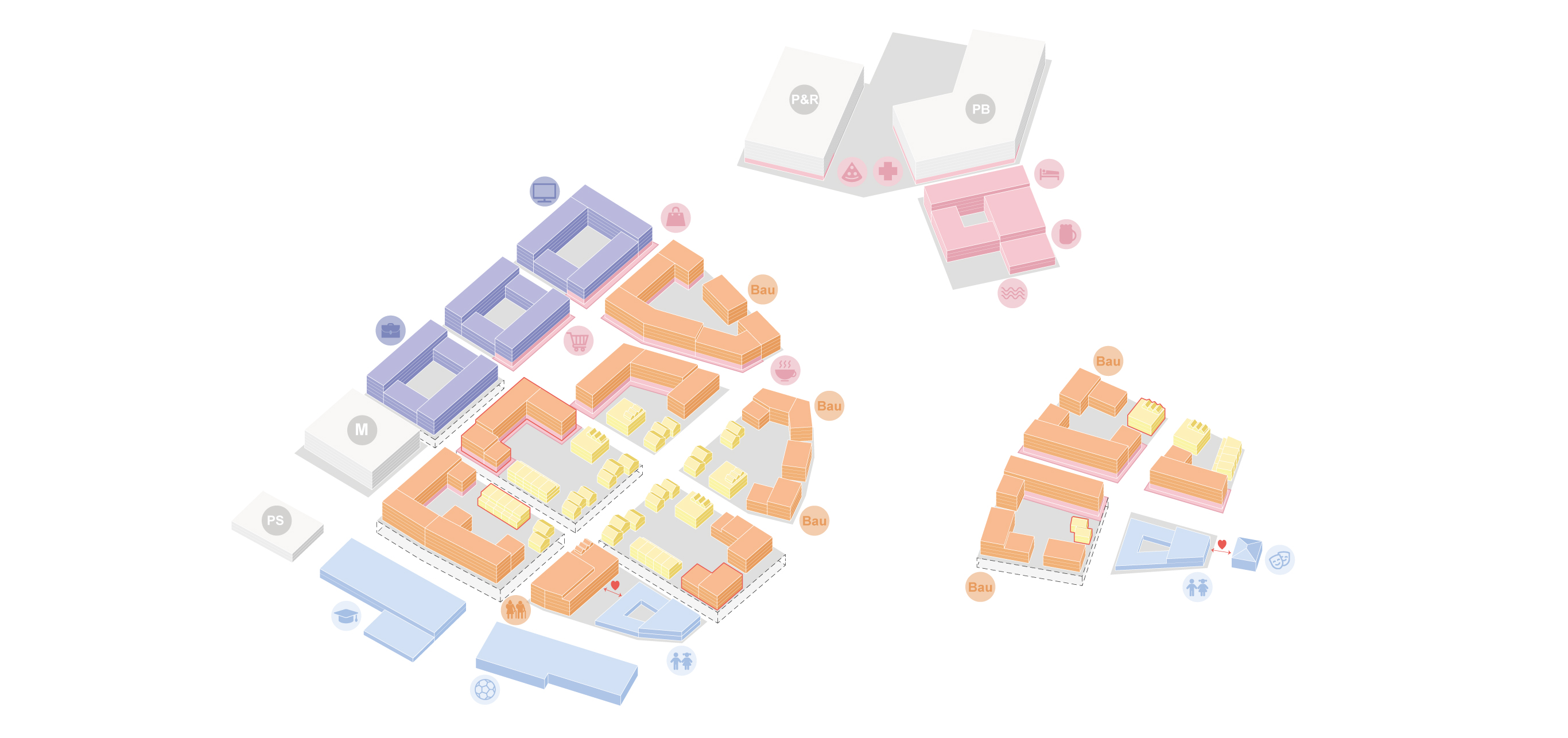
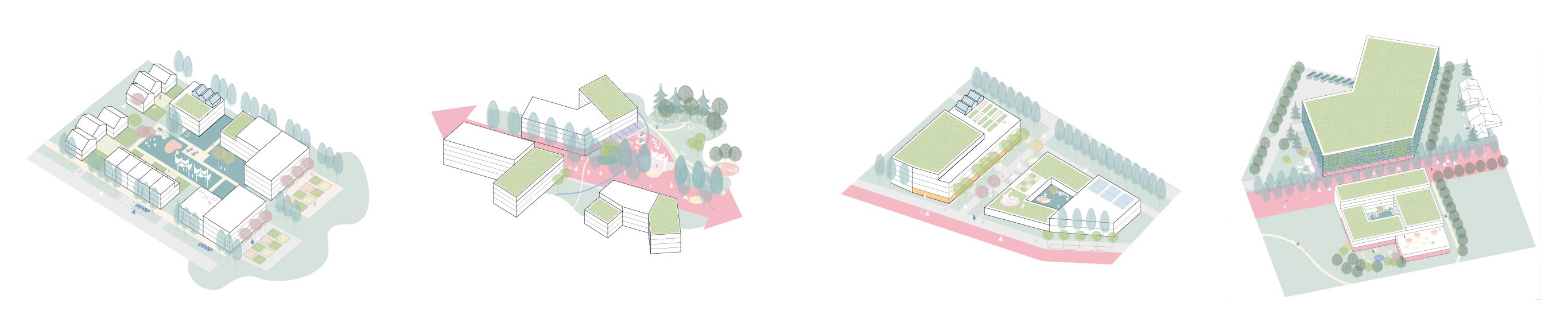
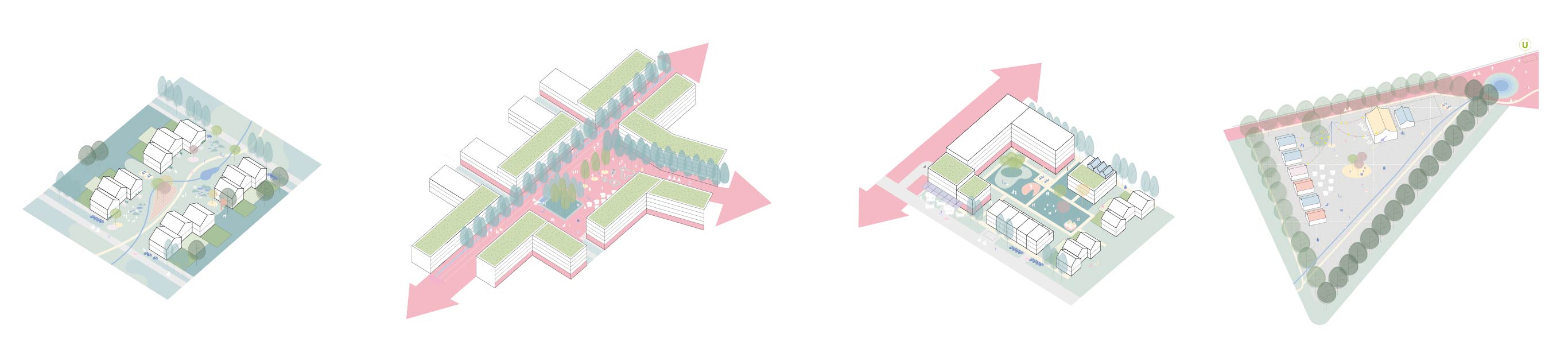
The new urban layout consists of three plots. The distribution of functions emphasises the hybrid character of the spaces and the mix of functions: apartments, workplaces, public facilities (such as a daycare center, retirement home or a youth center), sports hall or a new school. The apartment blocks are designed as groups of different residential typologies: multi-storey residential buildings, townhouses as well as single-family structures. To protect future residents from traffic noise, the blocks are placed behind the office buildings, and a green belt is created along the main traffic route as a noise protection. The neighborhood is also connected to the underground train line.
Car traffic is limited here to the main roads. Parking spaces are provided in mobility centers and underground parking, distributed evenly throughout the area for convenience of users. Mobility centers are supplemented by a network of bicycle and car-sharing stations. Such regulation of motorized traffic allows to free up a significant amount of space for common use and create a green, lively atmosphere in the new district.
Open water channels ensure sustainable rainwater retention. Green spaces with lush, evaporative vegetation, as well as water elements contribute to natural cooling. Recreational areas such as neighbourhood squares, community gardens, orchards, biodiversity areas and playgrounds can be found throughout the entire planning area. Roof surfaces will be extensively greened and fitted with photovoltaic elements. Where possible, the facades of the buildings will be greened as well. The height of the new buildings is suited to timber construction.